Tag Archives: Marvel

The Sun Will Shine On Us Again: The Power of Sunlight in ‘Avengers: Infinity War’ and ‘Avengers: Endgame’

In the lead up to the release of Marvel Studio’s Avengers: Infinity War, much was made over the fact that Josh Brolin’s Thanos was actually the film’s protagonist. According to screenwriters Markus and McFeely, amidst its undoubtedly comic-book-crossover-event-inspired fractured narrative of various teams of heroes scattered all across the universe, the core of the narrative was, in fact, Thanos’ story. And while the accuracy of this statement can and will be debated for years to come, Infinity War does, very much so, put Thanos on a very traditional, Joseph Campbell-ian hero’s journey.

His quest is to acquire all six infinity stones so that he can use them to wipe out half of all life in the universe, while the Avengers (read: our heroes) serve as the antagonists for all intents and purposes. They are the opposing force, the narrative drive attempting to prevent Thanos from completing his quest. Which, regardless of what other flaws the film may have, is an exceedingly bold creative choice. One of the most interesting ways that Markus, McFeely, and directors the Russo brothers chronicle this story is through the use of a single, very simple motif: sunlight.

Over the course of Avengers: Infinity War and Avengers: Endgame, the visual motif of sunlight is used to tell a story all its own, symbolizing the literal light at the end of the tunnel for our characters’ respective hero’s journeys.
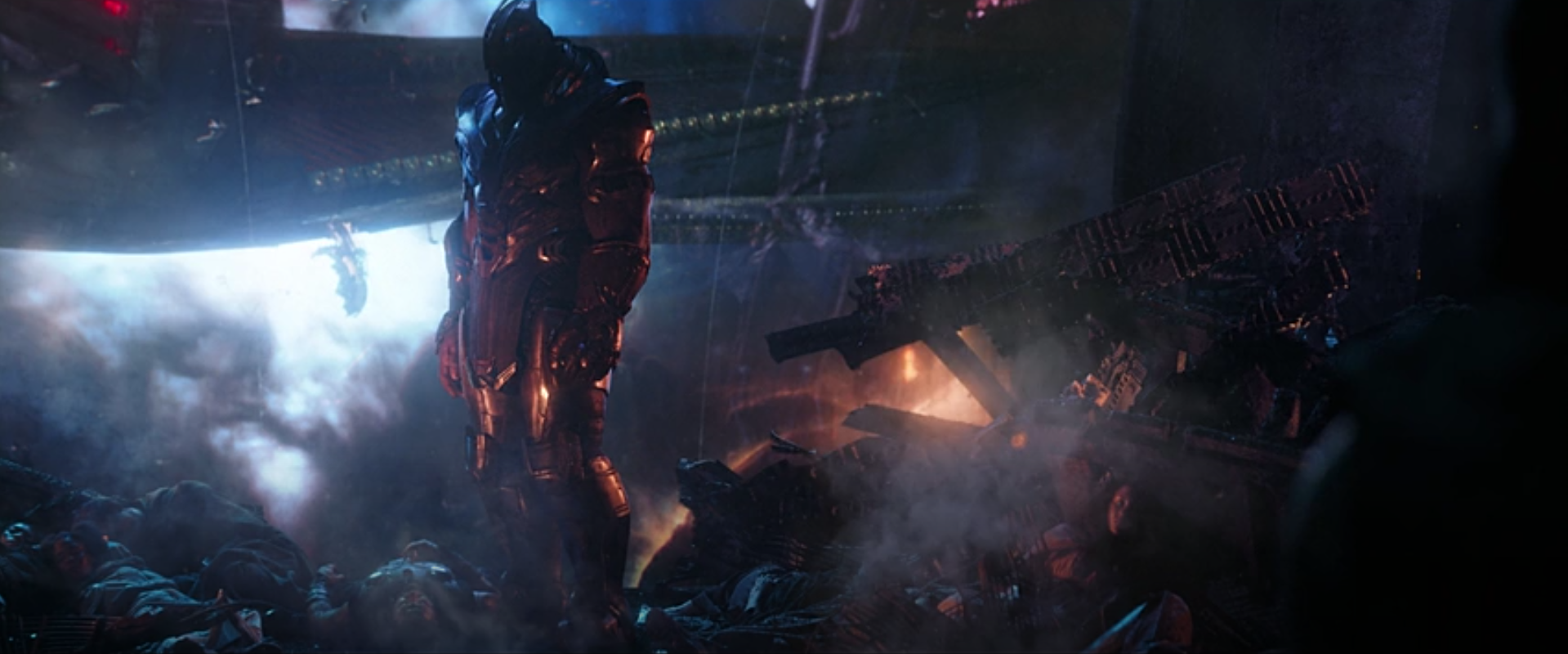
As mentioned, Infinity War is very much Thanos’ story. Thus, in that film, sunlight is used as Thanos’ motif, serving as a constant visual cue, showing how close he is to completing his quest. As the Mad Titan himself says, he longs to “rest and watch the sun rise on a grateful universe”. His introduction to the film comes mid-siege of the Asgardian refugee vessel, the Statesman, as he and his Black Order kill off half of the Asgardians left alive. Here, the camera pans around, reveling in the death and destruction Thanos hath wrought before revealing the character himself. Yet his back is to us, instead looking off into space at a blinding star in the distance; his sunlight. Although this scene sees him immersed in the vast darkness of space, just beginning his journey, his eyes are focused on the sunlight that awaits him. From the moment he is introduced to us, Thanos is exclusively focused on completing his quest.

This first scene also foregrounds the motif’s future relevance to the over-arching story of the two films as a whole, with Loki’s dialogue to Thor: “I assure you, brother. The sun will shine on us again”. But this isn’t their film, and it’s not yet their motif. As a result, Loki is mercilessly killed at the hands of Thanos.

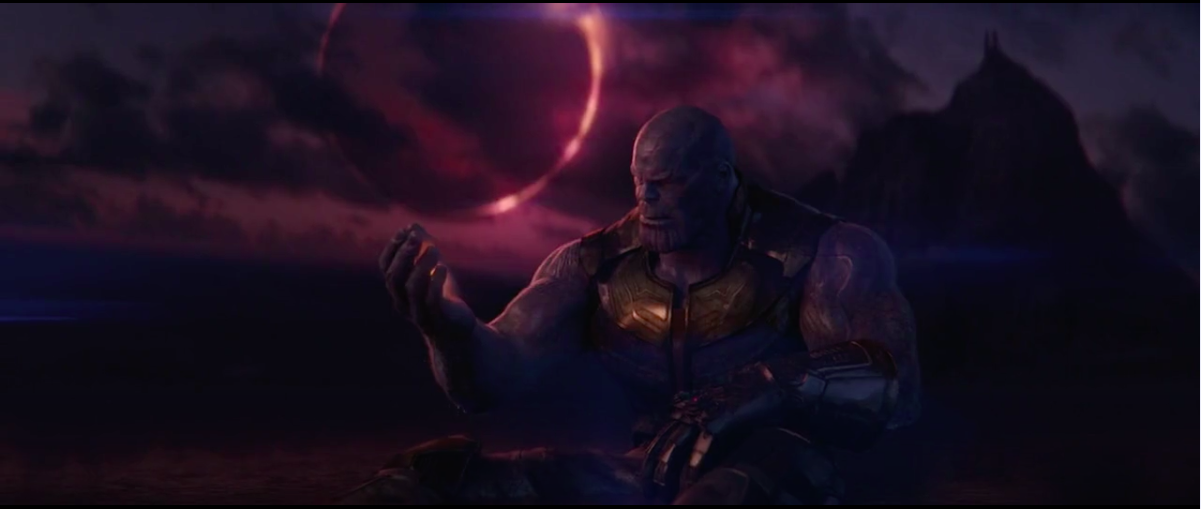
The remainder of Infinity War sees Thanos quite literally journeying from the darkness of space to increasingly brighter environments. From space, he journeys to Vormir to acquire the Soul Stone. This planet’s primary light source is a constantly eclipsed sun. He grows closer to his sunlight but it does not yet shine upon him. It is no coincidence that the film presents Vormir as the biggest obstacle to Thanos as a character, emotionally. In order to attain the stone, he must sacrifice Gamora, an act which he himself later states “exacts a heavy toll”. Immediately following Gamora’s death, the sky of Vormir ignites with bright, blinding light; Thanos has gotten that much closer to his goal.
From here, he journeys to Titan, a planet which, from a lighting perspective, seems to be stuck in an unending magic hour. The entire planet is lit in the orange glow of encroaching or dissipating sunlight, moving Thanos one step closer to his goal. Again, here he attains another stone, this time the Time Stone from Doctor Strange, moving him one step closer to his quest. Which is what allows him to move to his next location; Earth. Or more specifically, Wakanda.

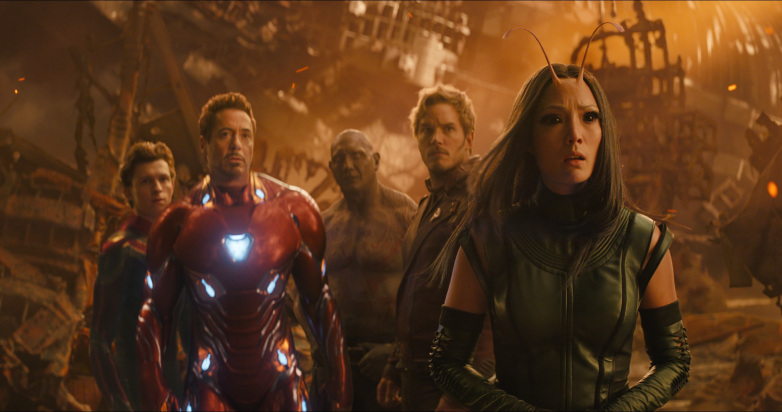
Here, Thanos is illuminated in full-blown, harsh sunlight for the first time in the entire film. He unquestionably bests the entirety of the remaining Avengers roster and proceeds to rip the Mind Stone from Vision’s head. With the entire Infinity Gauntlet fully assembled, it looks as though Thanos’ victory is imminent. But then, something unexpected happens. Thor attacks Thanos, with Thor being framed against the sunlight, eclipsing Thanos’ moment of victory. Every ounce of the form, from this framing, to the music, is telling the audience that this is the moment Thor saves the day and puts all of this to an end. For a brief moment, it looks as though Loki was right; the sun is shining on their family once more, as Thor takes Thanos’ sunlight for his own. But alas, the motif is still not yet theirs. Thor thinks he’s won, he thinks the sunlight is his own. But Thanos chides him, telling him “you should have gone for the head” and still uses the Gauntlet all the same. He obliterates half of the universe, leading to all of the Avengers hearing the thundering of storm clouds as they watch half of the universe turn to dust. Meanwhile, Thanos teleports himself to the Garden, where he is able to peacefully sit and watch the sunrise in the film’s final frames.
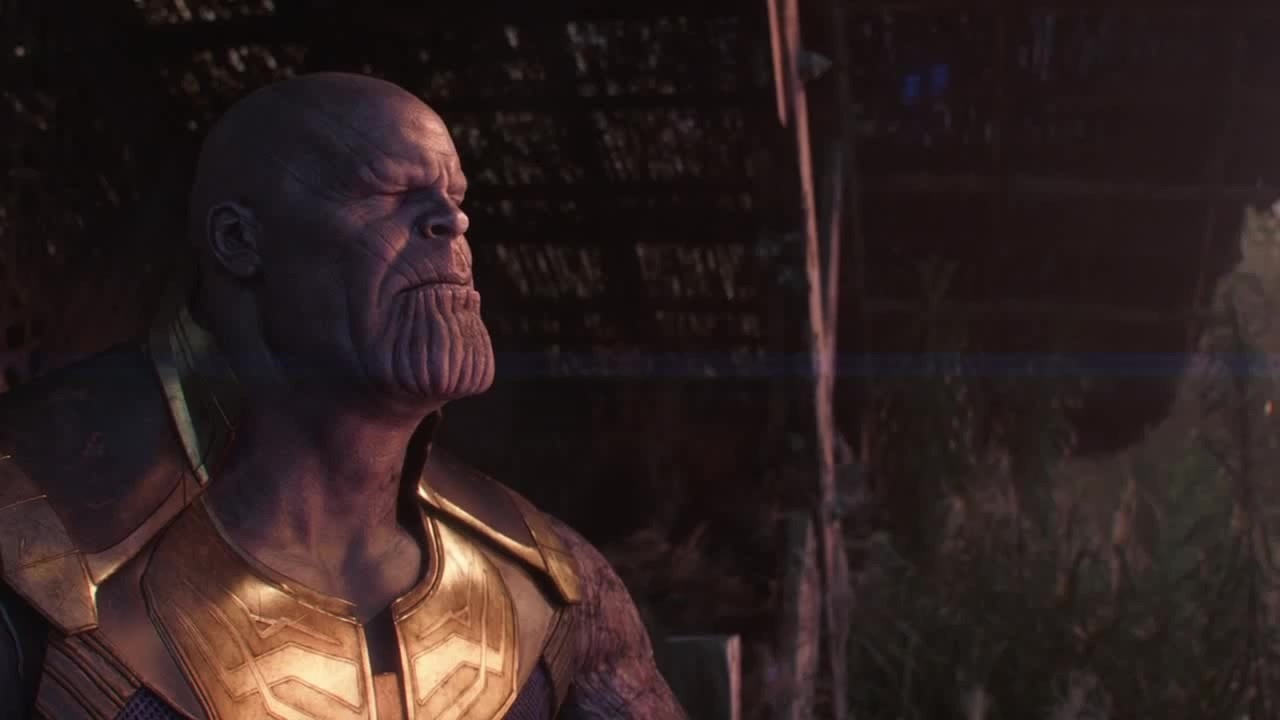
Infinity War is Thanos’ hero’s journey and he does successfully complete it. The Russos are so committed to this idea that they even have the guts to end the film on this victorious shot, with the form and motif quite literally spelling it out that Thanos has won and forcing the audience to marinate in that fact.

Which leads us to Endgame. Much like the two previous Avengers films, Joss Whedon’s The Avengers and Avengers: Age of UltronInfinity War and Endgame are each other’s mirror opposites. Whereas Whedon’s films told the converse stories of the assembly and subsequent disassembly of the original Avengers team, the Russos’ films tell the story of Thanos’ victorious journey in snapping the universe in half and the Avengers’ subsequent journey to undo that very act.

After a cold open featuring Hawkeye’s family all getting dusted by Thanos’ snap in an environment that is grey and devoid of sunlight, with the thundering storm clouds being heard once again, Endgame properly opens with Tony Stark and Nebula stranded in space. But unlike Thanos at the beginning of Infinity War, there is no sunlight for them to look to. The entire ship is illuminated in the cold green-blue lighting of the void; there is no victory in sight for them. Tony records what he thinks to be a final goodbye message to his beloved Pepper Potts and Nebula tucks him into his chair safely, practically preparing for their imminent death.
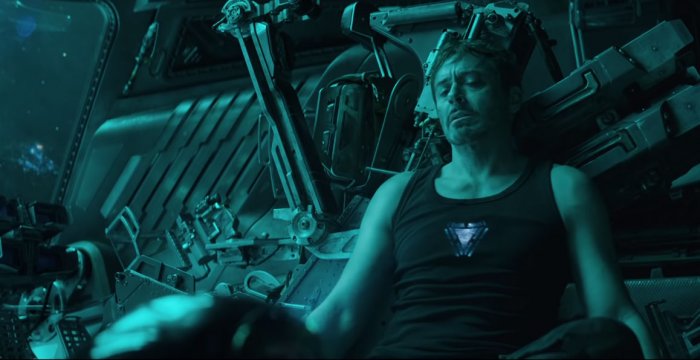
The camera holds on a close-up of Tony’s face for a period of time, illuminated sparsely in this blue-green lighting. Slowly, the light gets warmer and warmer, turning to orange. Tony opens his eyes to see Captain Marvel there to save them, creating her own sunlight. She is the sunlight for Tony in more ways than one. Not only does she provide literal salvation, taking them back to Earth and saving their lives, but she also provides hope. As he later tells her back at Avengers HQ, “you’re great, you’re what we need, fresh blood”. She is a hope for the future, a future that doesn’t need Tony Stark anymore, a future that is safe without him.

After returning to Earth, the rest of the remaining Avengers board the Benatar and fly off to Thanos’ Garden, in the hopes of getting the Gauntlet and using it to bring everybody back. Here, as they reach the jump point which sends them careening through space at light speed, the motif is introduced specifically to Steve Rogers. There is a blinding light in the middle of the tunnel of lights as they make the jump, a literal light at the end of the tunnel, if you will. The film cuts to a close-up of Steve’s eye, the light reflected in his iris. They are chasing his sunlight, this blinding fever dream that they have to beat Thanos at all costs. Much like Thanos, this goal is the only thing on Steve’s, motivating his every choice. When Natasha later attempts to comfort him once they arrive at the Garden, telling him that their plan is going to work, his response is extremely telling: “I know it is. Because I don’t know what I’m going to do if it doesn’t.”

They all journey down to the Garden, entrap Thanos immediately, finding him weakened and having already destroyed the stones. And it’s here that the motif is introduced specifically to Thor. In his rage, Thor chops off Thanos’ head, even repeating the same rhetoric Thanos said to him at the end of Infinity War, “I went for the head”. We watch Thor leave, walking out into the sunlight. But the focus fades, the image going blurry. This is not the sunlight Thor seeks, it is not a victory. It is a false win, one dictated by the flaws of his past. As we later see, this choice takes Thor down a path that leads to depression and isolation.

Immediately following this, the film cuts to five years later. Every establishing shot of New York from 2023 is clouded in fog and blue lighting. It is a world literally devoid of sunlight; there is no hope for our heroes, no victory in sight. Until Scott Lang shows up, that is. Scott’s re-emergence from the Quantum Tunnel marks the first time since the time jump that there is even a glimpse of anything resembling sunlight. He brings with him hope; the idea that perhaps the Quantum Realm could be utilized to time travel.

While this spark of light makes a big impact on Steve and Natasha, others aren’t as impressed. It’s here that we see Tony again for the first time since the time-jump, living in a gorgeous house by a lake, their entire estate awash in sunlight. Tony has completed his quest, in living a family man’s life with Pepper and their daughter Morgan. He has found his own peace, illuminating him in sunlight. As a result, he isn’t as quick to accept Scott’s proposed plan as the others. Tellingly, it isn’t until the middle of the night, engulfed in darkness and his own thoughts of remorse and regret at seeing images of he and Peter Parker, that he begins to actually indulge the idea.

From here, the entire team steadily begins working together towards accomplishing their self-proclaimed “time heist” and all of them get varying degrees of sunlight. Their environments are more well-lit as they begin to realize that their goal may actually be achievable. Notably, the actual Quantum Tunnel they build to time travel with uses reflective glass panels above it, resulting in directly refracted sunlight. This is used exceedingly well when Clint Barton does the test run, journeying back to his family’s home before their death. When he returns, the panels move above, him as waves of sunlight literally wash over him only to be pulled away just as he remembers the pain of his family being truly gone. 

As they prepare to embark upon the time heist, sunlight floods through the windows of the facility in a way we haven’t at all seen up to this point. They are closer than ever before to fulfilling their quest.

The actual time heist itself also features some brilliant uses of the motif, as it follows Infinity War’s progression in reverse order. The first destination visited is 2012 New York, which is in broad daylight. The second is 2013 Asgard, which is an interior with sunlight coming only through various windows. The third is 2014 Morag, which has an intimate magic hour lighting and the last is Vormir, the setting of the eternally eclipsed sun. It is no coincidence that this literal journey into darkness happens parallel to the film reintroducing Thanos to the narrative.

His ship, Sanctuary II is constantly framed against the backlighting of bright sunlight, with the ship literally eclipsing the light. The sunlight may be our heroes’ motif now, but Thanos continues to do everything he can to literally stand in the way of it.

This all comes to head after the team returns to the present, with all of the Stones in-tow. They use them to snap everybody back to life, unaware that Thanos has followed them back to this time period as well. Immediately following the snap, Scott walks over to a nearby window and sees genuine sunlight shining down on them. It is beautiful, until it is literally eclipsed by Thanos’ ship.
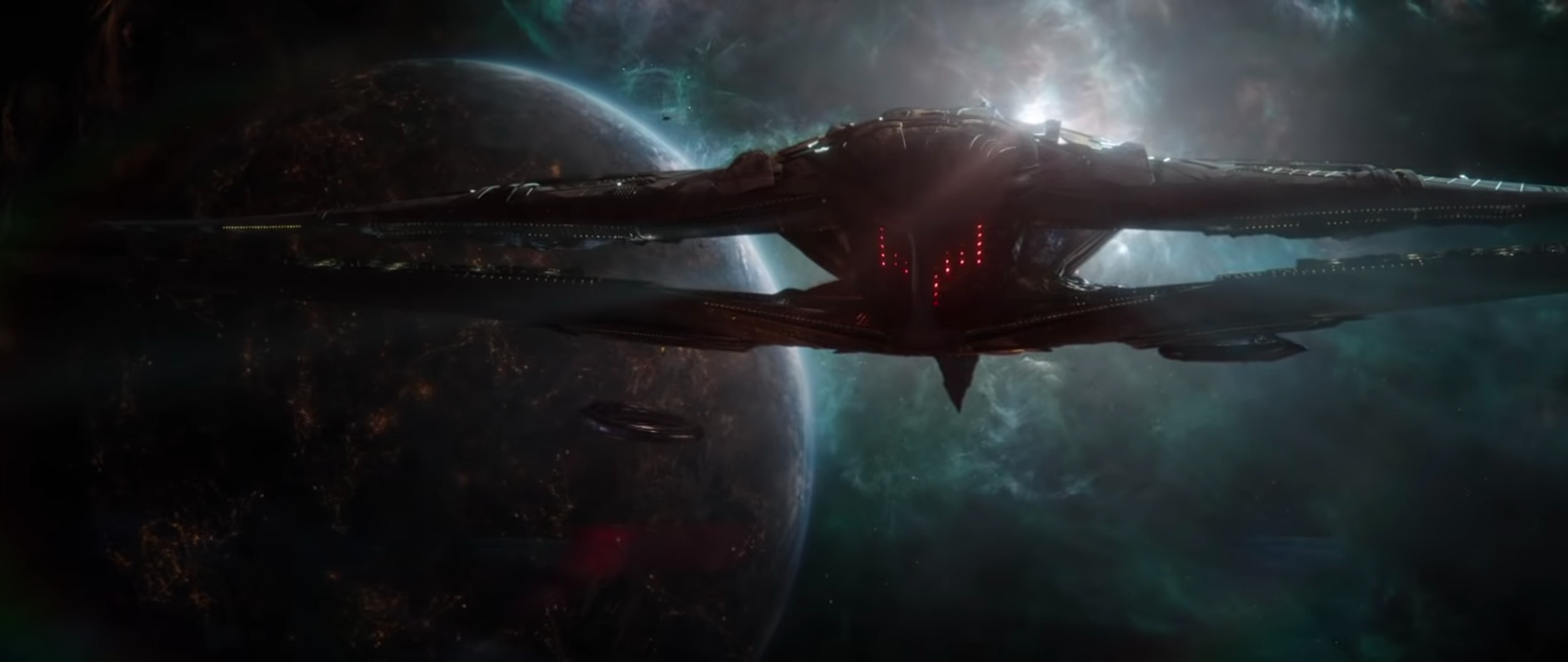
The ship fires on the Avengers Compound, reducing it to rubble. The once clear sky is clouded with dirt, ash, and rubble residue. Here, Thanos quite literally darkens the sky, obscuring their sunlight. And yet, the Avengers do not give up hope. As Steve, Tony, and Thor all emerge from the rubble to face Thanos, their sunlight shines through the darkness, specifically spotlighting them.

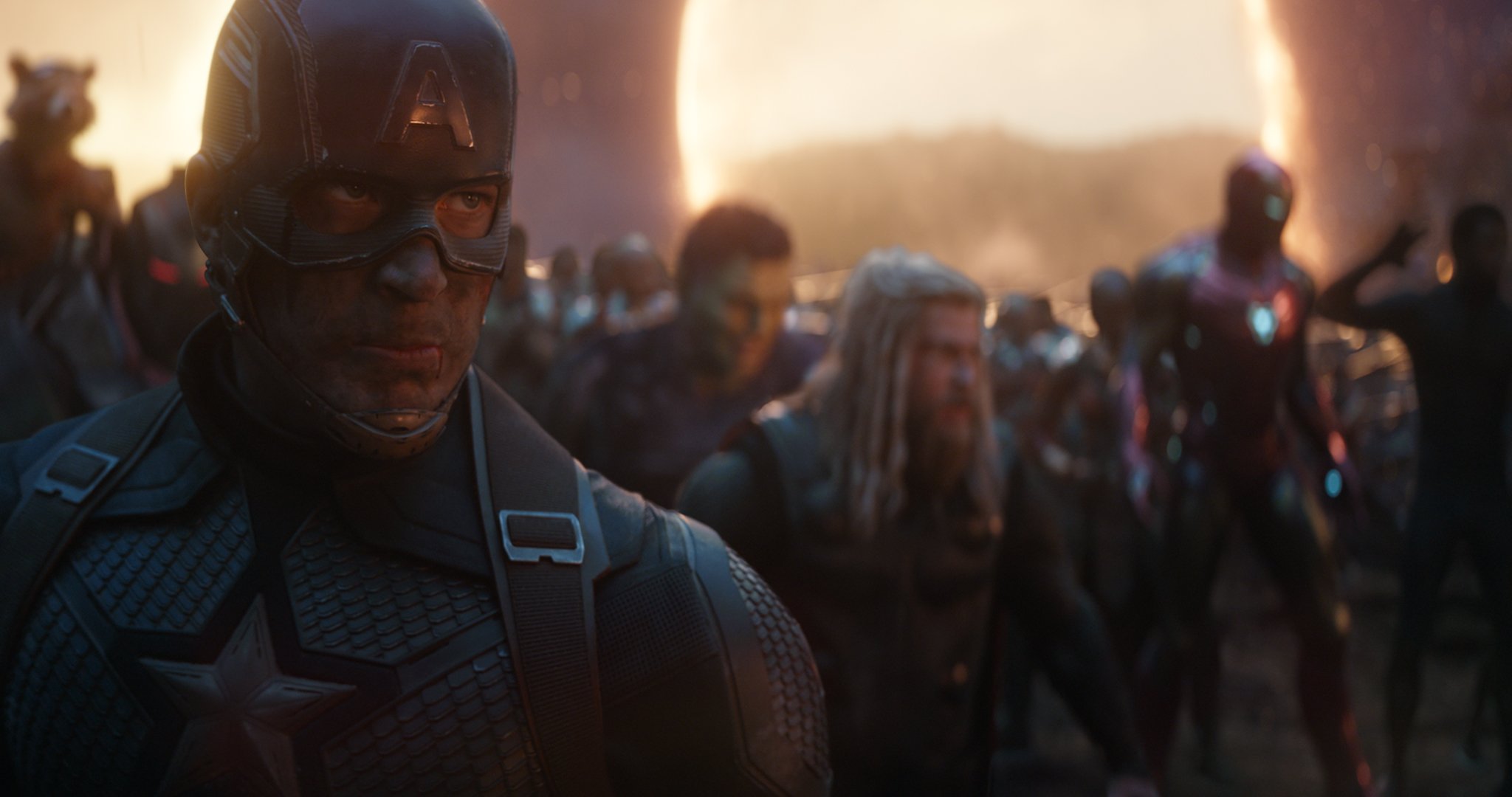
The three of them take Thanos on and are ultimately bested. Tony and Thor are left incapacitated as Thanos unleashes the hordes of his armies upon the Earth. Steve is the only one left to stand against them and in what is arguably the MCU’s best moment of cinematography ever, there is a gorgeous canvas shot of Captain America staring down the armies of evil, darkness encroaching all-around, with a sliver of sunlight still illuminating him. Even in the face of certain defeat, Steve refuses to lose hope, to lose sight of why they’re still here, still fighting.

And it’s then that a familiar voice crackles over the speaker, saying, “On your left”. Dozens of sling ring portals open behind Steve, each one of them bringing light. As the various heroes of the MCU come to Steve’s aid, they literally introduce dozens of new sunlight sources into the frame along with them. Much like Captain Marvel at the start of the film, they are the sunlight. Which is why the resulting “Avengers, assemble” and battle feel so earned and so emotionally-charged; it is the climactic moment of a two-film-long motif that pays off in one of the grandest ways imaginable.
At the end of the battle, after Tony snaps all of Thanos’ armies out of existence, Thanos is left to sit amidst the rubble. As his armies and ships evaporate, sunlight comes flooding back into the setting, only this time Thanos has his back to the sun. The sun is no longer rising for Thanos, it is setting. And with this knowledge, he too disappears.

In the film’s final moments, all of our characters find their own sunlight. Tony’s funeral is awash with it as all of his friends and family gather to mourn him, proving that the world will be alright without him and that he has truly earned his rest. Thor takes the words of his mother to heart, leaving New Asgard to Valkyrie and embarking on a journey with the Guardians of the Galaxy.

And Steve gets the most poetic moment of all. After time traveling back into the past one last time, the film closes on an intimate shot of Steve and his long-lost love, Peggy Carter. They are reunited, dancing, in love, and positively aglow in the sunlight pouring in through their window. 

‘Captain Marvel’ Review

CAPTAIN MARVEL (8 out of 10) Written and Directed by Anna Boden and Ryan Fleck; Starring Brie Larson, Samuel L. Jackson, Ben Mendelsohn, Annette Benning, Jude Law, and Lashana Lynch; Rated PG-13 for sequences of sci-fi violence and action, and brief suggestive language; Running time 124 minutes; In wide release March 8, 2019.

Before I get to my review, here are notes from my life that will make you think there’s a recipe at the end.

I picked up Captain Marvel #2 in 2012 because of the cover. The titular character doing a Rosie the Riveter pose with no other distractions caught my eye, it was the first comic I ever picked up on my own out of my own interest. I have been hooked (read: obsessed) ever since. I remember in 2014 when it was announced that Captain Marvel was on Marvel’s upcoming slate of movies, I gasped and said “no way.” I watched a live stream in 2016 of the Marvel panel at SDCC because it was rumored they would announce Brie Larson as Carol Danvers (they did, but they did her bad by half-heartedly remembering they had to announce her at the end). As 2019 approached, I’ve been excited to the point of tears and sickness with each new set image, trailer, and toy release.

I don’t share these things with you because I claim to be the biggest, bestest fan. I share these things because I want you to understand my excitement. Finally, finally, I and women like me get to see us on the screen in the MCU. A woman with her own movie, her own story, finally joins this decade-old franchise. I, a female comic reader, get to see my comics brought to life on screen.

To the point: Captain Marvel is for a specific audience. Captain Marvel is for the MCU stans who have been with it since the beginning, or at least since GotG. As a standalone origin movie, it stumbles (much like Carol oh no I’m connecting dots) and tries to simplify a complex conflict in less than two hours. Some soundtrack drops, welcome nostalgically as they are, seem out of place. We are also constantly reminded this takes place in the ’90s. Did you see the site? As a Captain Marvel character movie though…

Bless the writer/director team of Anna Boden and Ryan Fleck for utilizing Kelly Sue Deconnick (the writer who brought us the version of Carol as we know her today) as a consultant on this film. This Carol Danvers we see on screen was plucked from the comics and brought to sweet, snarky life. Elements of her story including an older pilot she admires, sarcastic wit, failings to have control over her powers, and even a refugee crisis are present.

Actors that steal the show are…all of them. Every actor owns their performance and even surprises me. I’ve always considered Gemma Chan a little too stoic and fragile, but she absolutely changed my opinion after seeing her kick ass as Minn-Erva. Ben Mendelsohn takes the usual “bad guy” trope and flips it. He’s humorous, not the rigid and angry villain we are used to seeing in Marvel origin stories. Lashana Lynch as Maria Rambeau is given so much more to do than play “someone that Carol knew once.” Goose the cat does cat things (and non-cat things) and as a cat lady, I thoroughly support any Goose endeavor.

Marvel seems to be leaning into the misleading trailers idea, as they did with Infinity War. I have wasted hours of my life pouring over screenshots and YouTube breakdowns of the trailers leading up to Captain Marvel, but I’m pleased to say that not everything is as it seems in the previews. If this is the case and Marvel is starting to use false scenes, I salute them. I think it’s a genius idea. Keep us die hard theorists busy while working behind the scenes on the actual MCU timeline. Do I feel cheated out of those missing hours of my life? Absolutely not. The kind of crazy-theorist behavior makes me who I am and honestly much more knowledgeable about the lore these movies pull from.

As I was driving home, I thought about how Captain Marvel doesn’t follow the standard origin story formula and why I felt there was so much left that could have been said. We should have seen her struggles in the Air Force. We should have seen her overcome trials and tribulations of the time. But, at the same time, those steps are used so often in storytelling because we want to see women prove themselves. We want to answer the internalized misogynistic question, “why does she deserve to be a hero?” I answered my own doubts with the same realization Carol comes to: she doesn’t have to prove herself to anyone.

This movie doesn’t need to prove itself to anyone. Fans don’t need to prove themselves to be fans. Captain Marvel, whether you like it or not, is here and ready to fight–regardless of if you think she’s capable or not.  

And, as promised from the beginning, here is a recipe. Actually, it’s a link to recipes courtesy of Dole who has put together a series of dishes specifically for the Captain Marvel release! 

How a YouTube Video Changed the MCU Forever

In today’s modern world, the Marvel Cinematic Universe can frequently feel more like an oversized big-business brand than it does an actual creative endeavor.

Since its humble beginnings back in the late 2000s when the then-struggling Marvel Studios decided to take matters into their own hands and attempt to self-produce films for the remaining characters they still had the rights for, the franchise and studio itself has been on a hero’s journey not all that dissimilar from those often featured in their films. With the release of Iron Man in 2008, they sent a vicious shock up the spine of the entire entertainment industry. Not only had they successfully self-produced a film about one of their so-called “B-List characters”; they had turned it into a gargantuan hit that audiences loved.

In the decade-plus since then, Marvel has spent its time rising from the scrappy underdogs to the rulers of all of Tinseltown as the rest of the industry has been stuck constantly tripping over their own two feet, attempting to ape Marvel’s shared universe model.

I say all of this simply to reiterate: Marvel may have started this David and Goliath story in the role of David, but they have since become firmly entrenched in the role of Goliath. They are a multi-billion dollar asset, a practically impenetrable brand that is essentially a license to print money. And yet, it is consistently humbling just how often the scrappy underdog roots of their story still shine through in Kevin Feige and co.’s unrelenting desire to improve their craft. For an easy example of this, one need look no further than the tale of that time not-so-long-ago when an innocent little YouTube video changed the entire MCU forever.

If you don’t know of the YouTube channel Every Frame a Painting, I cannot recommend it highly enough. Started in 2014 and run by writers/editors Taylor Ramos and Tony Zhou until its official end in 2017, the channel spent its time providing some of the most educational and insightful analysis of legitimate film form that the internet had to offer. Examining everything from the visual comedy stylings of Edgar Wright, to how Orson Welles’ F for Fake showcased how to perfectly structure a video essay, the channel consistently delivered thought-provoking and well-crafted content. They also garnered a fair amount of success and acclaim for themselves in the process. Their videos regularly reached view-counts in the multi-millions and even as recently as this past year, acclaimed directors such as Christopher McQuarrie were still actively singing their praises.

So when the channel posted a video essay entitled The Marvel Symphonic Universe on September 12, 2016 and it rapidly became one of their highest-viewed videos to-date, it was apparent that it was reaching a fairly large audience.

The essay itself focused on the musical scores of the Marvel Cinematic Universe, as Ramos and Zhou explored why it was that the scores featured in these films were ultimately fairly forgettable. They also used this topic as a springboard to tackle the larger issue of the increasingly more common trend of popular films utilizing temp music during the scoring and editing process, examining and how and why this genericized the art of film scoring at large.

In exploring issues such as this, the way Marvel frequently utilized bland and clichéd musical tropes, and the way the films often actively deprioritized the score in the sound mix, the central thesis of the video became that;

“Marvel sacrifices emotional richness for safe choices”

By and large, Ramos and Zhou were correct in their assessment of this issue. In a steadfast attempt to maintain cohesion across the entirety of their interconnected sub-franchises, Marvel had created a bland, non-offensive sonic palette which accompanied all of its films.

A clichéd orchestral score that hit high notes for moments of emotional resonance and percussive crashes during the actions sequences, paired with samplings of various pop and rock songs from decades past. Guardians of the Galaxy may have been the film to foreground this jukebox-style technique overtly, but it had been present ever since the use of AC/DC in the first Iron Man. It was their in-house style, similar to what they were doing with the visuals at this same point-in-time, setting pre-established norms that every film would follow, all in an attempt to give the audience a sense of consistency.

This isn’t an inherently bad thing. It’s just that implementing such regulations leads to some incredibly bland choices, as they protrude into a composer’s creative process and serve to actively limit the number of potential options. In the words of Ramos and Zhou, this makes things unequivocally “safe” but does not leave room for the kind of artistic “risks” that endear music to the audience.

Which is why it is incredibly interesting to look at how Marvel’s music subsequently changed so dramatically after the release of this video. It’s important to remember that The Marvel Symphonic Universe video essay was released in the latter half of 2016, meaning that the MCU had been running and operating with these rules and regulations in place for over eight years. Yet suddenly, in the final months of 2016, things started to change.

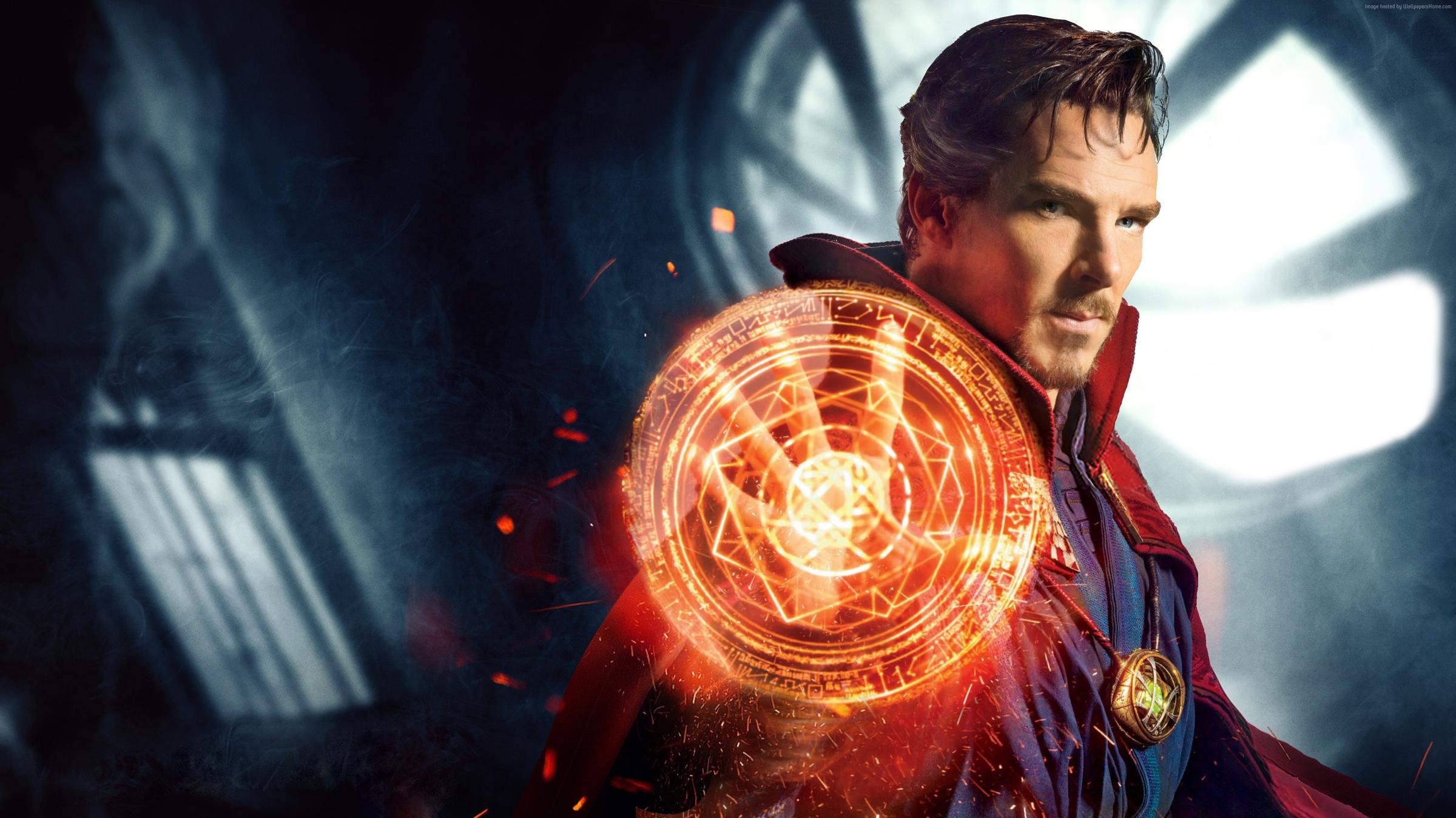
The first MCU film to be released after the video essay was Doctor Strange in November of 2016, a mere two months after the video had been released. And while Academy Award-winning composer Michael Giacchino had already been brought on board the film in May of that year, meaning the scoring process would have already been underway when the video essay was released, there’s still a correlation between the two.

Giacchino’s score sees Marvel actively distancing themselves from their own in-house rules. Whereas in the previous eight years, even when big-time composers such as Patrick Doyle or Alan Silvestri delivered scores their work generally lacked the composer’s biggest authorial stamps, Giacchino’s work on Strange sounds like a Giacchino score through-and-through. And part of the reason this was so prevalent in the film is that for the first time, the score was an actual emphasis of the film itself. Amidst director Scott Derrickson’s trippy visuals and phantasmagorical sequences of color, Giacchino’s score was able to take center-stage. In short, Strange wound up being a cornerstone for the franchise as it expanded its visual and audio sensibilities.

But if Doctor Strange was the first step in Marvel’s sonic evolution, then the next year saw them making full-blown leaps-and-bounds. 2017 was the first year that Marvel Studios released three feature films in one year and that eclectic line-up featured Guardians of the Galaxy Vol. 2Spider-Man: Homecoming, and Thor: Ragnarok. Whereas previous Marvel film scores could essentially be stacked up next to one another and listeners would have a hard time even hazarding a guess as to which film the music was actually from, each of these three films featured scores so varied and so distinct that their source material was unmistakable.

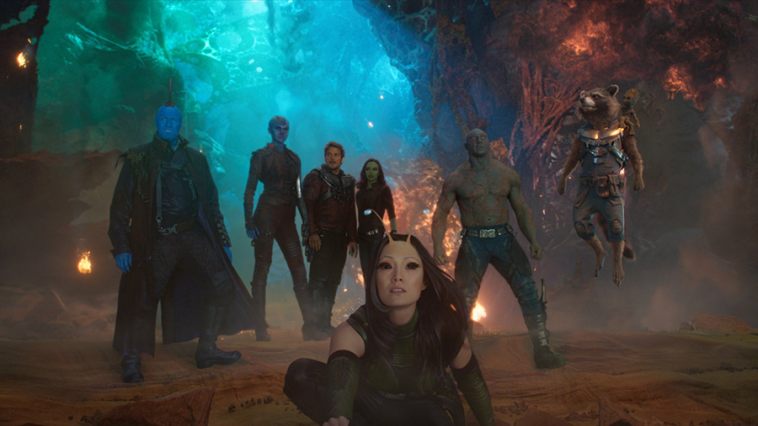
For Guardians of the Galaxy Vol. 2, composer Tyler Bates returned once again but whereas his score for the first Guardians film frequently felt generic and a bit uncharacteristically stilted, his score for the sequel was emotionally-charged and some of his finest work to date. It played like a super-charged space opera in every way, encompassing the colors, emotions, and characters of the film itself within its sound.

For Spider-Man: Homecoming, Michael Giacchino collaborated with the studio once again, this time crafting a schizophrenic and off-kilter score that fit the coming-of-age Spider-Man film like a glove. A good part of the film’s charm relied heavily on it channeling a post-modern John Hughes aesthetic and Giacchino’s left-of-center score created a beautiful yet unexpected marriage of sight and sound that was easily Marvel’s biggest musical risk yet.

And then, we got the big one. Thor: Ragnarok broke every rule in the Marvel scoring book. In working with synth-pop legend Mark Mothersbaugh, Marvel delivered its best and most memorable score, with melodies so well-crafted and clearly utilized in the film that they stayed with viewers long after leaving the theater. Gone were the trite orchestral beats and in were unique electronic flourishes that would have felt more at home in a John Carpenter film than in a Marvel film. A revolutionary score that perfectly complimented and challenged director Taika Waititi’s revolutionary Marvel film. It was the kind of big artistic swing that, even a year earlier, would have felt unimaginable. And yet here it was, blaring through the sound system of your local theater.

When looking at these three films specifically, the sizable impact of Ramos and Zhou’s work is immeasurable. It was as if Marvel set out to actively respond to each of their central critiques. They diversified their soundscapes for each individual film, avoided cluttering the mix or covering up the score with unnecessary sound, and put emphasis on making truly unique and original film scores rather than adhering to temp music banality. The end result is that this third phase of Marvel films doesn’t just have the best scores of the bunch, it also has the most emotionally rich and compelling films of the entire franchise.

One need look no further than the Oscar-nominated Black Panther and its absolutely incredible Ludwig Göransson-penned score to see just how dynamically different and emotionally affecting the MCU’s scores, and subsequently their films at large, have become. Because the score is the beating heart of every great film. One cannot make a great film without a great film score; one that challenges the text as often as it compliments it and works to strengthen the subtext in ways both big and small. Citizen Kane wouldn’t be the same film without Bernard Herman’s score. Nor would Star Wars or the films of Steven Spielberg be remotely the same without the work of John Williams.

I think that, above all else, this is what the Every Frame a Painting video essay helped Kevin Feige and co. to realize. That in limiting their soundscapes to these safe choices, they were actively preventing audiences from emotionally connecting to their films the same way that they themselves had connected to their own favorite films. So, instead of resting on their laurels, those same scrappy underdogs who were nearly laughed out of Hollywood for attempting to self-produce films about their B-list characters stepped up to the challenge, heard the criticism out, and took bigger risks than ever before.

Win ‘Ant-Man and the Wasp’ on Blu-Ray

Marvel did it again with Ant-Man and the Wasp, taking two lesser known comic characters and delivering a rousing and at times, heartfelt, adventure last summer. It’s finally coming out for home release so fans can watch it as many times as they want and to celebrate, we want to do a giveaway.

One lucky reader will win a blu-ray of the film, and entering to win is incredibly easy! All you have to do is send an email with ANT-MAN AND THE WASP in the subject line to ADAM@BIGSHINYROBOT.COM along with your mailing address (no PO Boxes, and in the U.S. only, please), and that’s it! If you repost this contest on Facebook and Twitter, you will get a bonus entry for each site you share it on; just be sure to let me know in the email which ones you posted it to. The contest will run until Friday, September 28, and the winner will be notified shortly thereafter.

Ant-Man and the Wasp will be available on blu-ray and 4K October 16 and digitally on October 2.

Paging Carol Danvers

I, and many fans, but mostly I, have been dying for a glimpse of the upcoming 2019 movie Captain Marvel. Since Marvel teased us with a pager and a logo at the end of Infinity War, the internet has been feverishly waiting, theorizing, drawing, and cosplaying the MCU’s newest hero. 

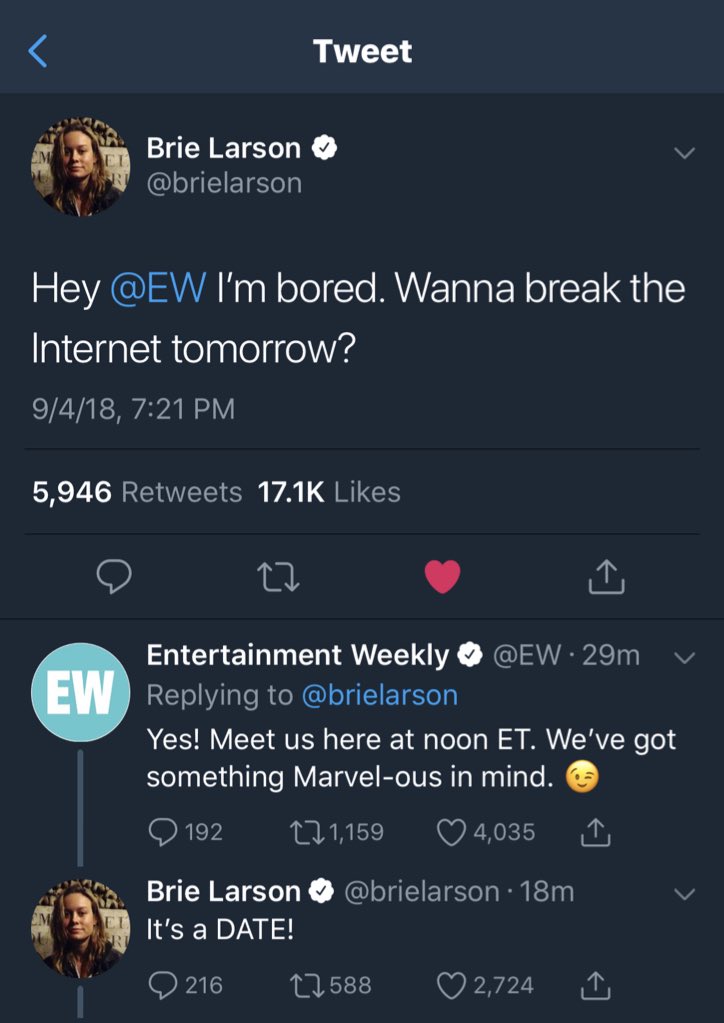
Finally, on September 4, 2018, Captain Marvel herself cryptically posted on Twitter that she was looking for something to do the next day.

The Carol Corps lost its collective mind. 

Noon crawled ever so slowly to us, and finally we were presented with our first glimpse of Brie Larson in the red, blue, and gold suit. Gracing the cover, no less!

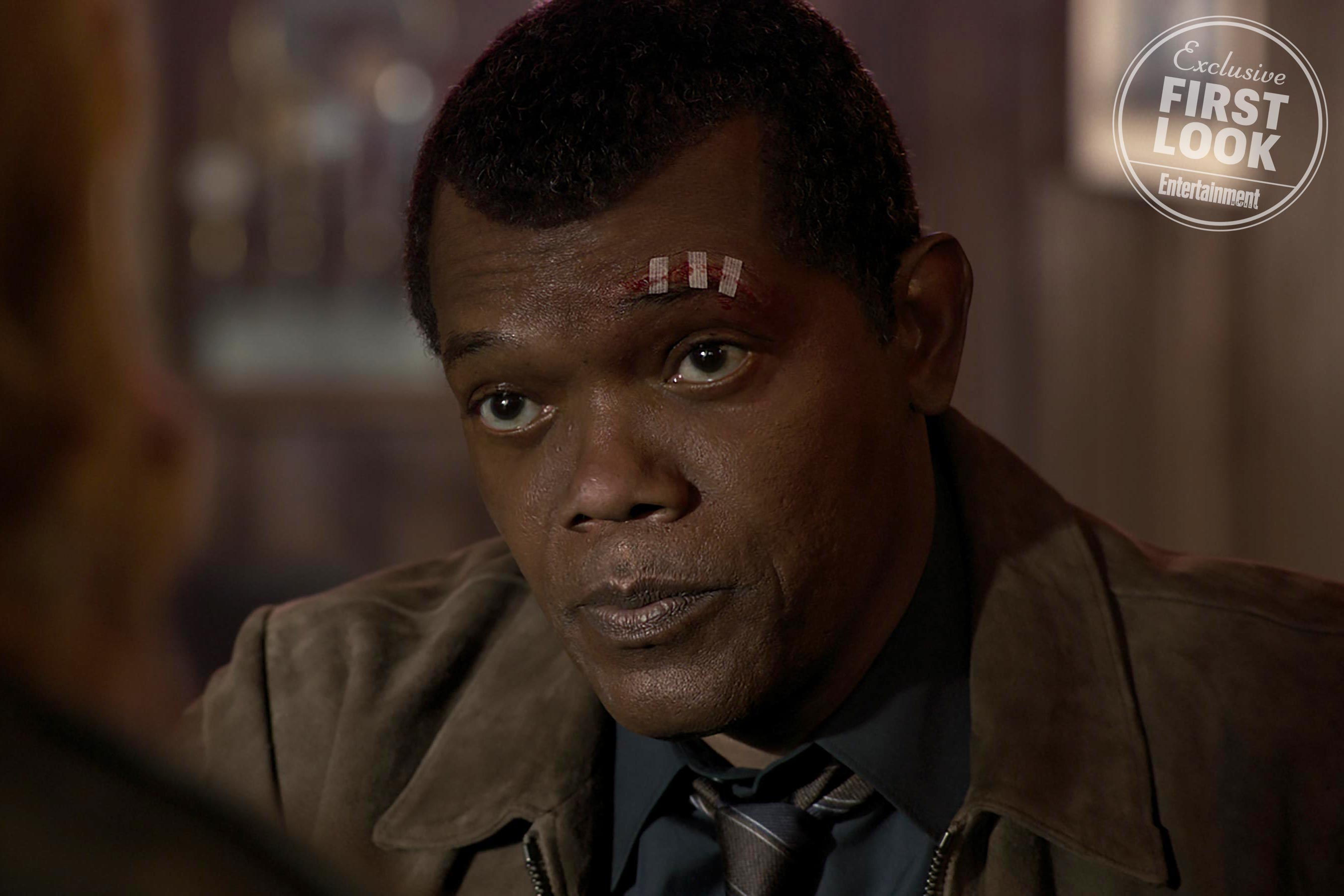
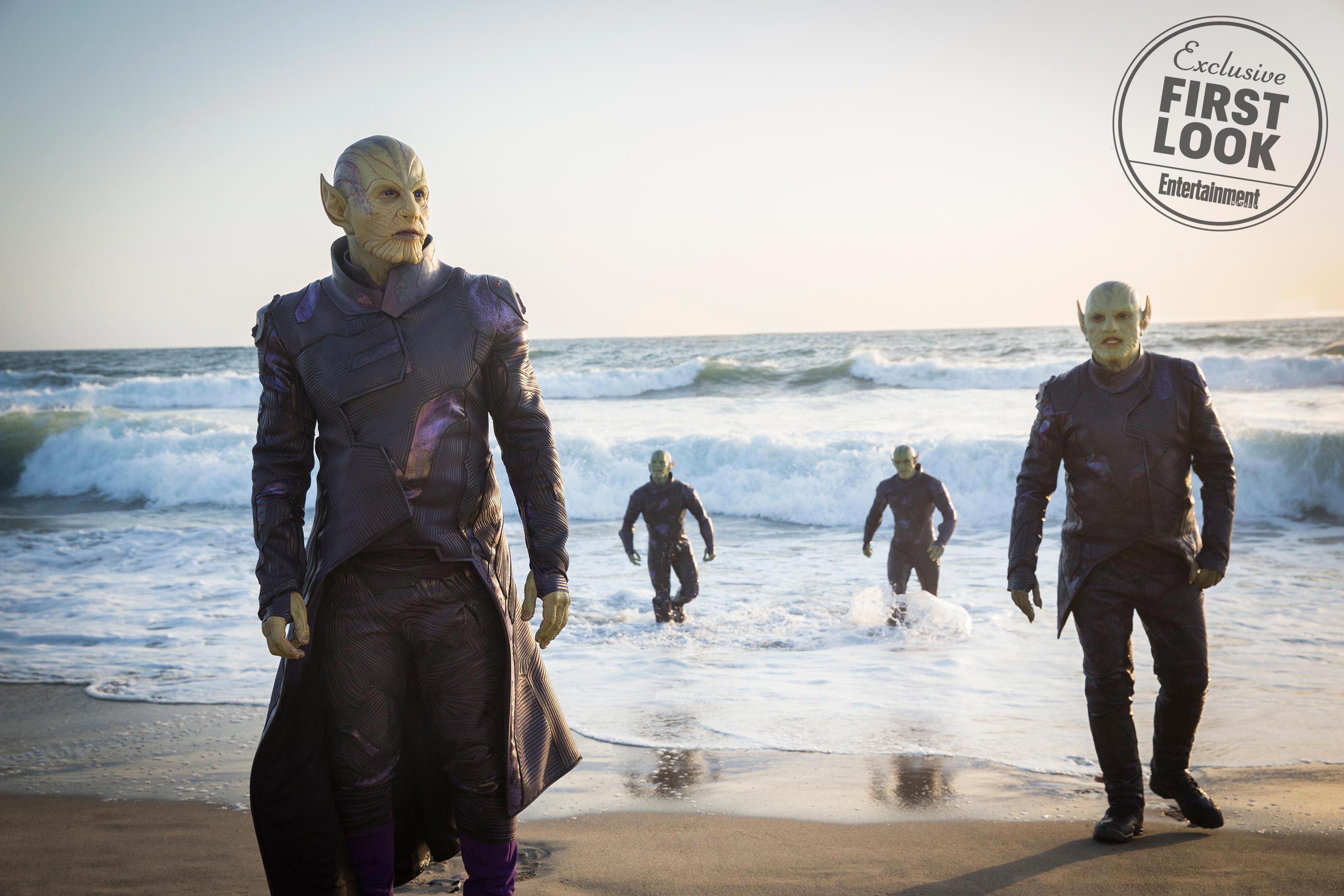
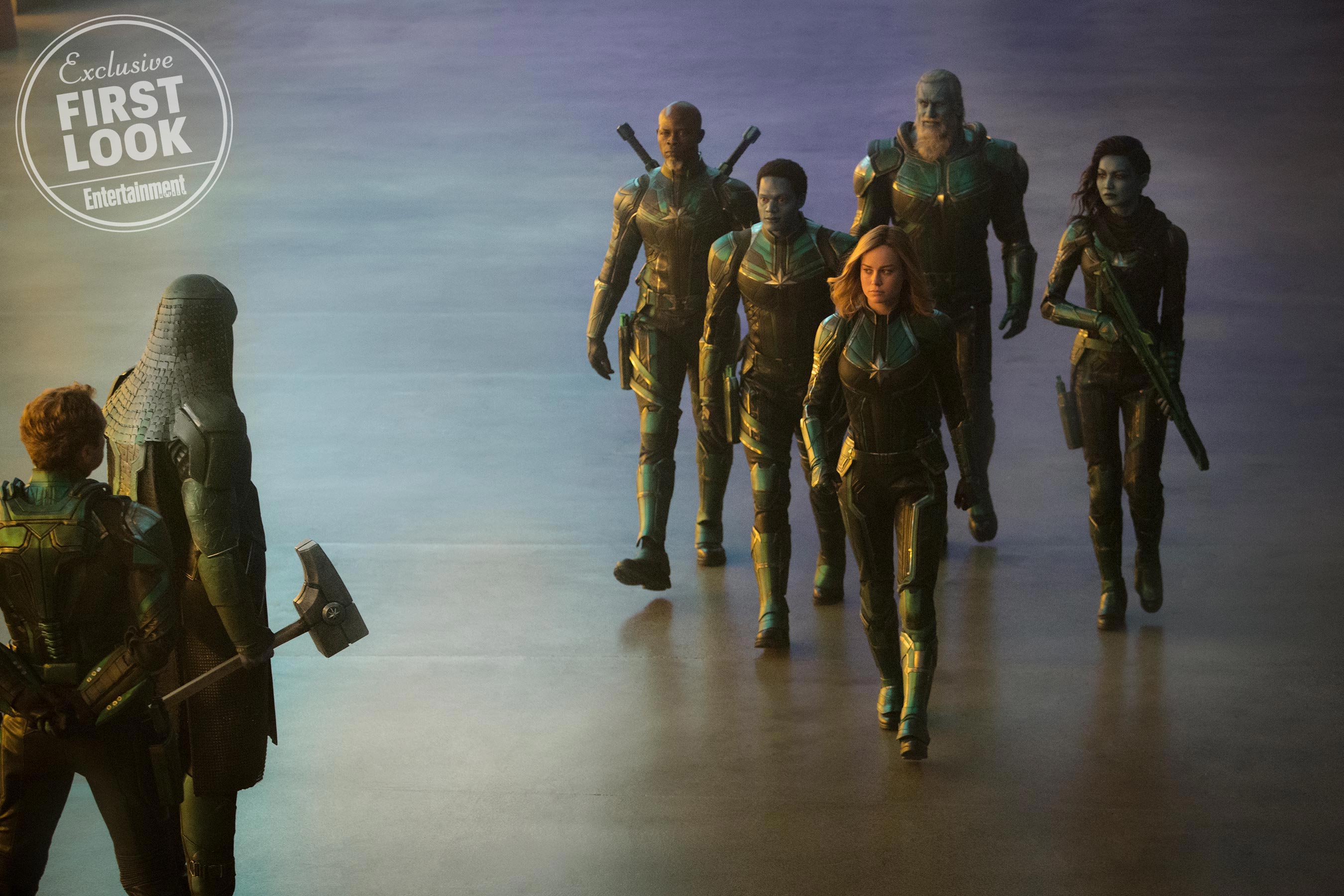
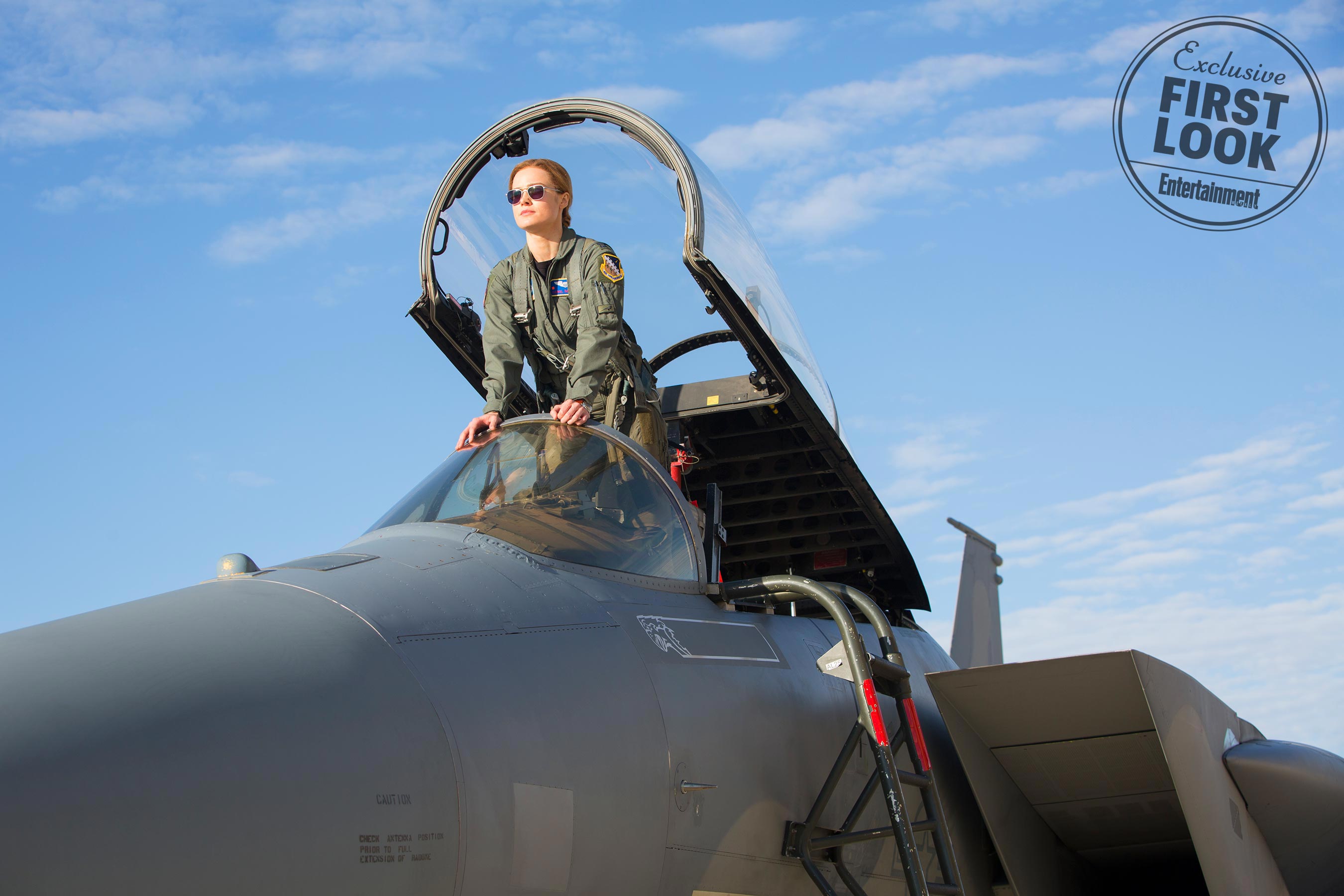
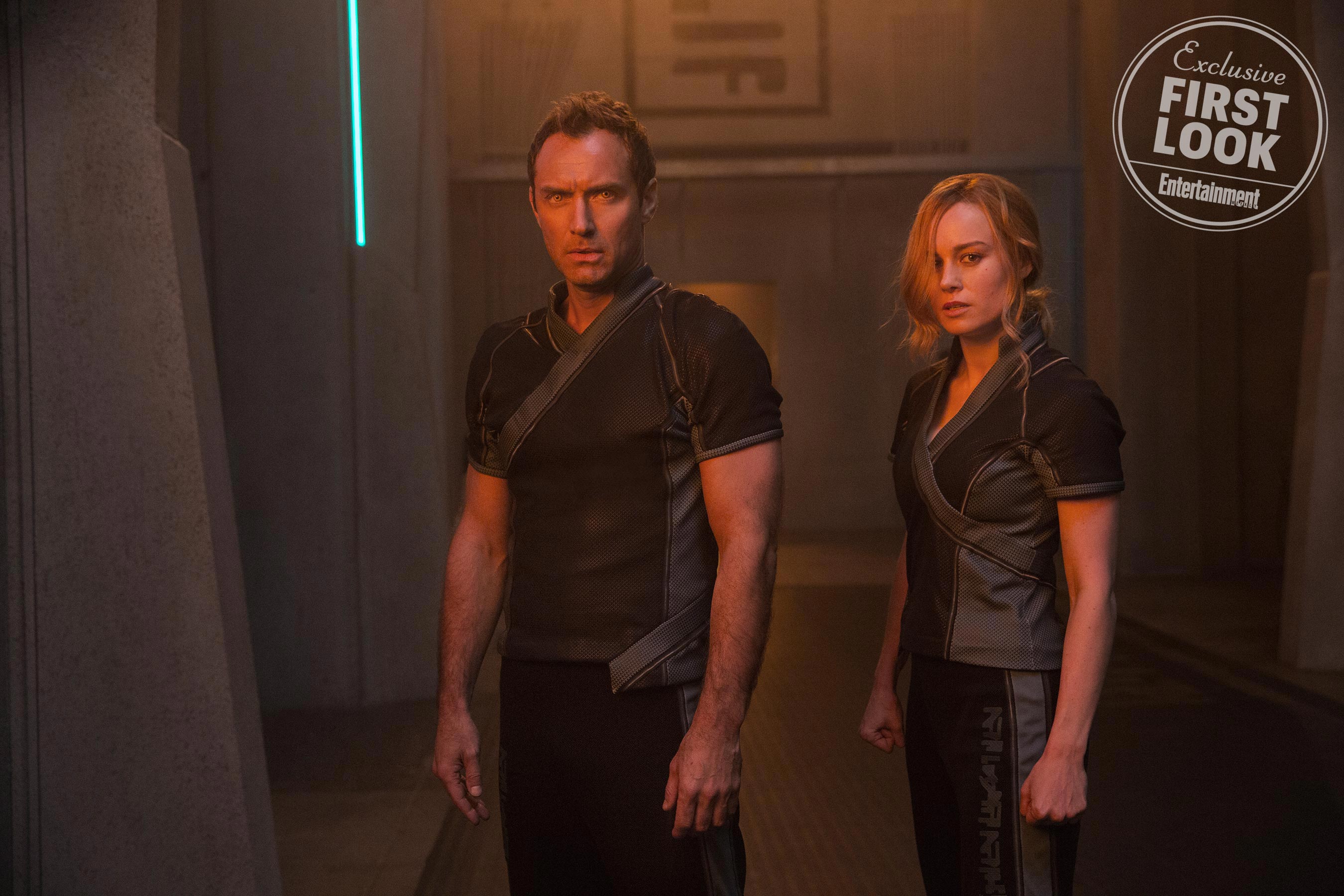
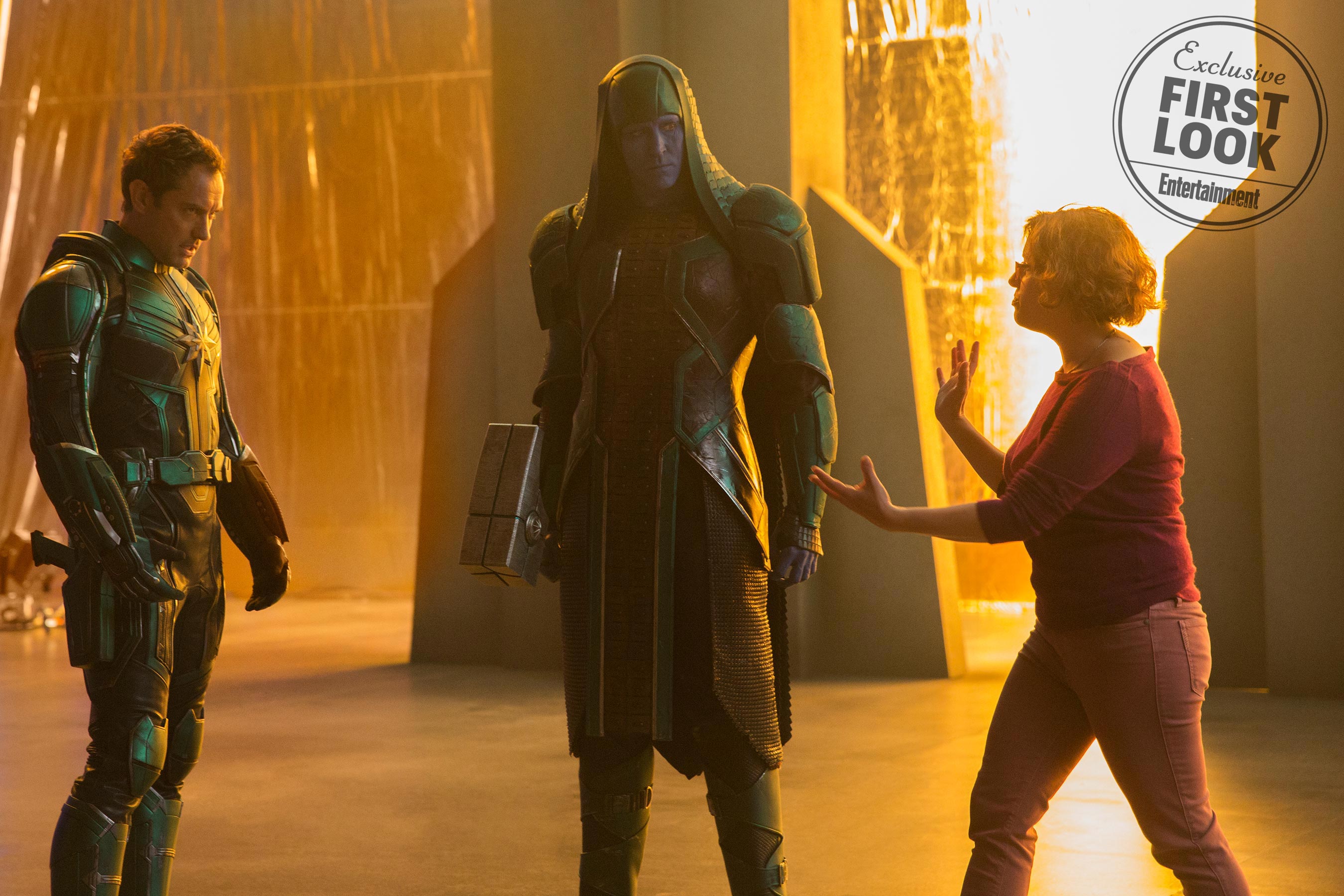
Along with the cover image, Entertainment Weekly provided 10 other images. First looks of Jude Law as Mar-Vell, Ronan’s return, and a peek at the movie’s assumed villains: the Skrulls.

Check out the images below, and read the full article here. You can also pick up a copy of the physical issue when it hits newsstands this Friday. 


Infinity War: Balancing the Stakes of the Modern Blockbuster

In a blockbuster landscape that is over-populated with world-ending scenarios and mass-scale destruction, the Russo Brothers made a distinct decision to make the stakes more personal in Avengers: Infinity War, even as their story veered jaggedly across space and time. And it was this single decision that made all of the difference in the world.

Somewhere around 2010, Hollywood became obsessed with destroying the planet. This came about, naturally, because studios were too pre-occupied with whether or not they could do it, they didn’t stop to consider if they should. It is why the stakes of a Superman film went from the life of Lois Lane in 1978 to the lives of the entire planet in 2013. There was a clear course of this natural evolution, as filmmakers sought to give audiences a new high every single weekend. The mindset very quickly became ‘bigger is better’. And while the initial roots of all of this began to take hold decades earlier, the easiest film to point to as a crystallization of this thought process is Marvel’s The Avengers.

As the studio brought together its four separate superheroes into one unified universe, the stakes, understandably, had to be raised. Narratively speaking, it had to make sense that one of the heroes alone couldn’t take out the villain this time, that they would need assistance. And from a production/marketing standpoint, this film needed to be the biggest hit out of them all. So, Whedon and company put the fate of the entire world on the line, as the Avengers assembled to fight the alien invaders.

The film culminates in a thirty-minute long third-act sequence which revolves around the Avengers trying to defeat the Chitauri and save the city. During this sequence, it is impressed on the audience again and again that if the battle is lost here, the world will certainly fall after. Inevitably, they succeed, and all is right with the world. Fast-forward to 2015, and this mentality has only festered and gotten stronger among the Marvel creative elite.

Avengers: Age of Ultron does more than put the fate of the world on the line for the last act, it puts the fate of the world on the line in the first thirty minutes. Ultron gains consciousness, escapes, and presents an immediate danger hell-bent on destroying all of humanity. In the film’s third-act sequence, Ultron attempts to raise the city of Sokovia to astronomical heights, in an attempt to use it as a meteorite and destroy the entire planet. So not only are the sky-high stakes dragged out for a much longer period of time, they are more overtly encompassing the fate of the entire planet.

The problem here is that following the success of The Avengers in 2012, every film wanted to have the fate of the world on the line in their climax. From the get-go, the world-ending climax is too big for audiences to relate to. The closest thing to an emotional connection a film can hope to conjure up in this scenario is the audience’s mutual agreement that the world ending would, obviously, be bad. But it’s such a massive event that there is no personal connection there, nothing that taps into the audiences’ own experiences. On top of that, every other blockbuster film having world-ending stakes makes it all just seem like white noise. Audiences grow numb to it and it loses the only base-level effect it ever had.

So then, why does Infinity War work so well? Thanos’ entire goal in life is to destroy half of all life in the universe, with just the snap of his fingers. If anything, on paper, this is just raising the world-ending stakes to an even more ridiculous high, with the fate of the entire universe on the line. But in execution, the Russos, alongside screenwriters Christopher Markus and Stephen McFeely, take a wonderful cue from their immediately prior Marvel film.

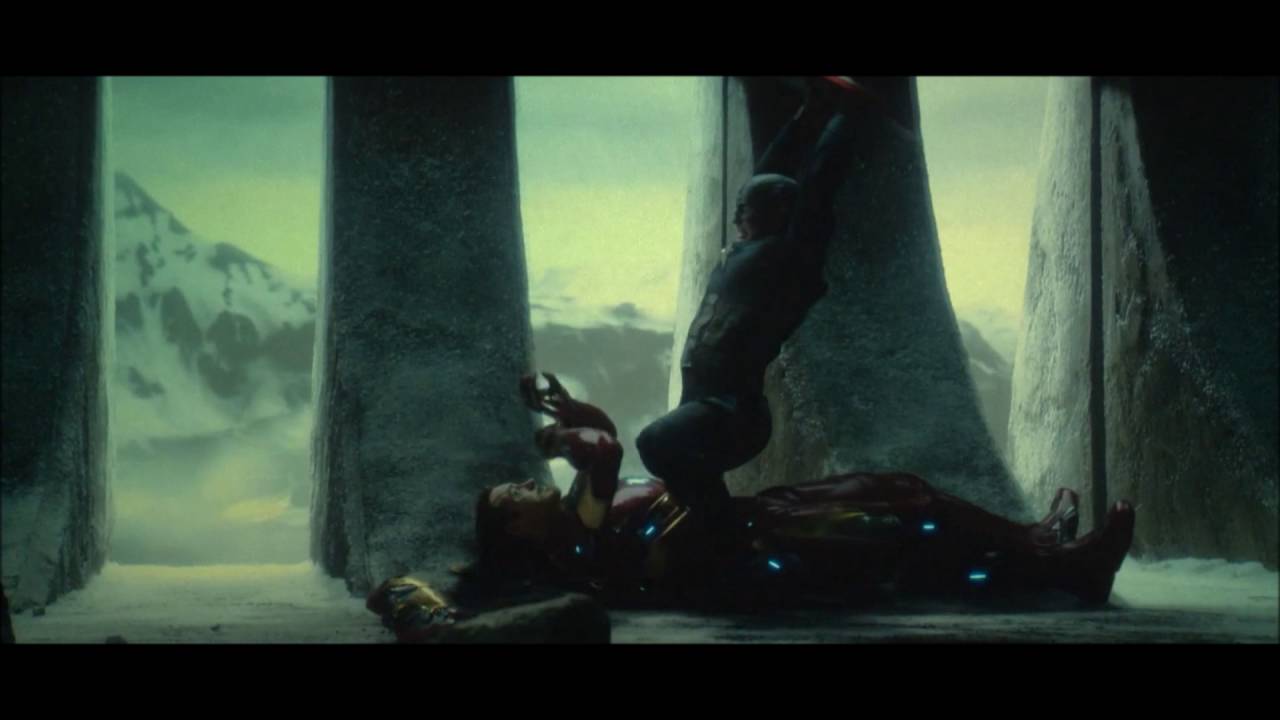
In 2016, Marvel released Captain America: Civil War, which was a bold subversion of the standard formula. A plot that seemingly revolved around Zemo attempting to awaken six other Winter Soldiers so that he could destroy the world instead gave way to a much more intimate and emotionally-driven conclusion. Zemo has no use for the other Winter Soldiers, instead luring the heroes to the base to show Tony Stark the footage of Bucky Barnes murdering his mother and father. In doing so, Zemo turns Tony Stark on both Bucky and Captain America and effectively splits the Avengers in half. There are no world-ending stakes here, it is all rooted in character and emotion. The stakes are Bucky’s life and the friendship between Iron Man and Captain America, and yet Civil War had what was easily the most compelling third-act of any Marvel film up to that point.

So how would that same creative team tackle a story that, by its very nature, required them to have world-ending stakes and still make it relevant? Turns out that the answer is pretty simple; root it all in character and emotion.

Throughout the entirety of Infinity War’s runtime, the universe is at stake. From the opening frame, Thanos is on the hunt for all six infinity stones and if he gets them, it’s game over. There are numerous sequences of alien invaders decimating sections of locations like New York City, Scotland, and Wakanda. But the film is not interested in convincing audiences that they should care about these cities being destroyed, it instead puts all of its chips on the characters themselves.

In the big third-act battle, the entire nation of Wakanda is in danger, but the stakes are put solely on the life of one character. Vision’s safety is the entire reason the Avengers go to Wakanda and it is also the only reason why Wakanda as a nation even becomes involved in the battle. As Cap says, they refuse to “trade lives” and are all willing to give their all to save Vision’s life. Throughout the fight sequence, the film makes sure to keep us anchored in how close Shuri is to removing the Mind Stone from Vision’s head, with each new layer of added tension in the fight sequence directly relating to how it gets Thanos’ army closer to Vision.

This also gives the villains far more interesting and cinematic motives. In the first two Avengers films, the Chitauri and Ultron’s bots, respectively, both had the sole motivation of destruction. Thus, Earth’s mightiest heroes only goal was to stop them. But here, the villains constantly have a singular individual or object they are after. Sure they’re MacGuffins, but they drive the plot into more complex and interesting territories. Seeing villains whose goal is to acquire Vision rather than destroy Wakanda gives our heroes a more interesting motivation as well that requires more genuine thought than any previous foe.

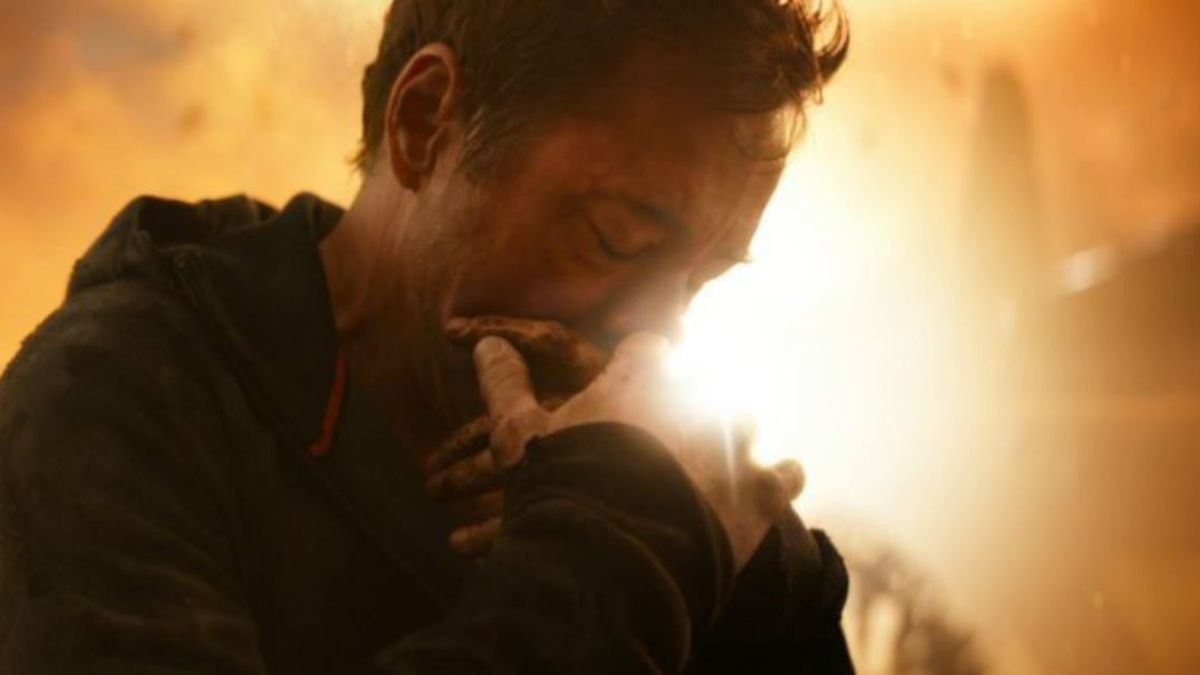
This isn’t just true in the finale, though. Throughout the film, the stakes are exceedingly personal. Peter Quill’s quest to stop Thanos is solely driven by his love of Gamora. Tony’s entire arc revolves around making the world a safer place for his family (see: his sense of loss and failure at losing his surrogate son, Peter Parker, at the end of the film). Steve Rogers’ arc is centered on him longing to reconnect with those he has been cut off from and refusing to lose any members of his surrogate family. Thor and Rocket build a relationship through mutual loss, with Thor being driven by his distinct sense of guilt over being directly responsible for half of Asgard’s people being eradicated. Even Thanos is painted as an emotionally tragic character, one who is forced to sacrifice everything in order to do what he feels is right.

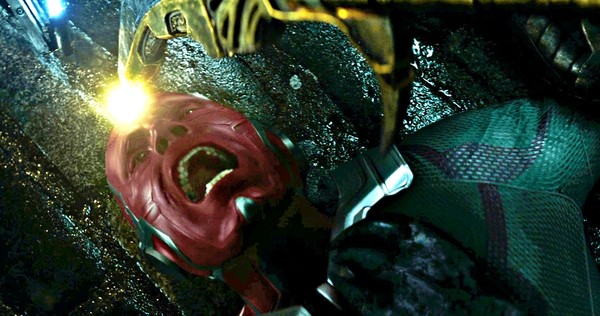
This is why the film’s climax works so well. Seeing Scarlett Witch and Vision share one final moment as she destroys the Mind Stone, and him in the process, is heartbreaking because it is so thoroughly rooted in their emotional connection. And it’s why it’s all the more tragic when Thanos uses the Time Stone to simply undo that sacrifice, and rip the Mind Stone out himself. All of their love, all of their sacrifice, it was all for nothing and we have to watch as our heroes fail, miserably.

Thanos snaps his fingers and has won the battle. But how the Russos show this to us is what’s of note. They take audiences through a painstakingly crafted gut-punch, in which we are forced to watch some of our most beloved heroes fade into nothing but ash. It’s the most world-ending situation to ever come to fruition in these films, but we aren’t shown it via watching a cast of extras slowly vanish on the streets of New York. We are shown it in the most personal and affecting way possible.

While other franchises are still busy attempting to make audiences care about the ever-rising stakes of world-ending chaos, Marvel has wisely moved on. In Infinity War, the stakes aim for the intimate rather than for the grandiose and the film is far more effective because of it.

Obscure

Of the two major comic book companies DC Comics and Marvel, which one do you think has the most characters?  Mind you I am talking about everyone, superheroes, villains, sidekicks as well as all of the supporting characters.  According to a November 2015 post on the site Quora.com James Wilding states that DC has more than 10,000 characters listed in its database!  Marvel, well it has a respectable 7,000 characters as of the Disney purchase in 2010. A later post on the same topic by Andy Grilz estimates that only one in eight of these characters are heroes.  Now of all these characters, who would you like to see get their own movie? Would you watch a Louis Lane standalone, what about a movie that tells Alfred the Butlers origin story? The big studios would never provide a budget for a movie like that, and this is where my favorite genre of film steps in to fill the void, the fan film.


Instead of a normal review, I thought I would share with you a few examples of fan films that tell the stories of some obscure but still loved DC and Marvel Characters.  Let’s start with DC. With the release of the movie Suicide Squad in 2016, everyone is in love with The Joker and Harley Quinn. Warner Brothers who own the rights to DC movies and characters are said to be planning on making both Joker and Harley Quinn stand alone films, BUT they would never green light a movie where these two iconic villains o to something as mundane as couple therapy.  Well writer Colin Costello, actress Brandi Price and director Terry Ziegelman did just that with their fan film ‘Committed’ released in October 2017. This award winning film is both funny and unusual and is worth watching several times.


Lets go a little more obscure then the Joker and Ms Quinn, what about a character from the very early days of DC comics, do you know who Dan ‘Terrible’ Turpin is?  No, well don’t worry not many people do. Turpin is the Lieutenant Inspector of the Metropolis Special Crimes Unit. Metropolis is of course the home of Superman, and Turpin is basically like Commissioner Gordon, but without a cool spotlight.  Turpin never really had any big comic book arcs and is such a small character that DC and Warner Brothers would never bother making him the star of his own movie, but filmmaker Robert Dodrill did! In May 2016 Dodrill released the fan film ‘Turpin: Terrible Toys’.  This film follows Turpin as he tries to put a stop to a serial killer called the ToyMaker. Winner of the Best Director Category of the 2017 Fanfilm Awards, this film does not have a Superman cameo, and he is not needed because it is very well written and acted and tells an original story.  This film was also made with a budget of only $1000.


What about we switch gears and talk about some obscure Marvel character fan films.  There are many awesome fan films on the well known characters like the Avengers, Wolverine or Spider-Man, however, unless you are a hard core Marvel fan you have probably never heard of Dr. Michael Morbius.  Dr Morbius or Morbius the Living Vampire as he is otherwise known first appeared in the Amazing Spider-Man #101 in October 1971 and was created by writer Roy Thomas. Morbius acquired his Vampire abilities while attempting to cure himself of a rare blood-disease.  Morbius will never be a part of the MCU (and let’s face it Vampires are so 2008) but filmmaker Chaz Dray decided that he needed his own film and the fan film ‘Morbius: The Living Vampire’ was released in October 2014. With a runtime of a little over twelve minutes this fan film has a great narrative and a lot of great fight scenes and teases the possibility of more Morbius films to come.


Last of all I want to talk about a breakthrough comic book character, Ms Marvel.  Ms Marvel or real name Kamala Khan is Marvel’s first ever Muslim superhero and was created by Sana Amanat and Stephen Wacker, writer G. Willow Wilson and artist Adrian Alphona.  Kamala first appeared in Captain Marvel #14 of August 2013, but later got her own solo series in early 2014. Kamala is from Jersey City, NJ (New Jersey represent!) and has Inhuman genes that give her Shapeshifting abilities.  The original Captain Marvel (Carol Danvers who was originally known as Ms Marvel) is getting her own MCU standalone movie which is due to be released in March of 2019, so I don’t think that Kamala will be getting her own movies anywhere in the MCU lineup.  But you guessed in, this is where a fan film steps in. Writer and director Anita Kalathara and Landis Aponte released ‘Kamala-Ms Marvel Fan Film’ in February 2017. At just over five minutes long this fan film is basically a long movie trailer, but it does tell a very powerful story, especially based on Kamala and her heritage.


So there you have it, four fan films based on some obscure comic book characters or obscure comic book character stories.  Each of these is special in different ways, they are original, well written and in almost all cases self financed by the filmmaker, so check them out.  For more in depth information and discussion on ‘Committed’ and ‘Turpin Terrible Toys’ give Shows 4 and 7 of the Fan Film Boyz Podcast a listen. Please feel free to comment on what you think of these films, or if you have some other obscure character fan films you want to share you can email me at fanfilmboyz@gmail.com.


Robert is one of the hosts of the Fan Film Boyz Podcast, a podcast that discusses, reviews and helps promote fan films.  For more in-depth discussion and interviews with directors, writers, actors and actresses, give the podcast a listen.


The Crucial Difference: Superman & Captain America

America, as a concept, is fundamentally in need of constant re-evaluation. Times change, the people change with them, and when you’re dealing with a population of over 352 million people, change can be drastic. Which is why it’s a dangerous choice to root a character so heavily in the idealism of classic Americana. To do so would be to court failure, in any day and age. But to do so and keep that character popular and socially relevant for just shy of a century? That sound impossible. And yet it’s been accomplished not once, but twice.

Superman and Captain America are essentially two sides of the same coin.

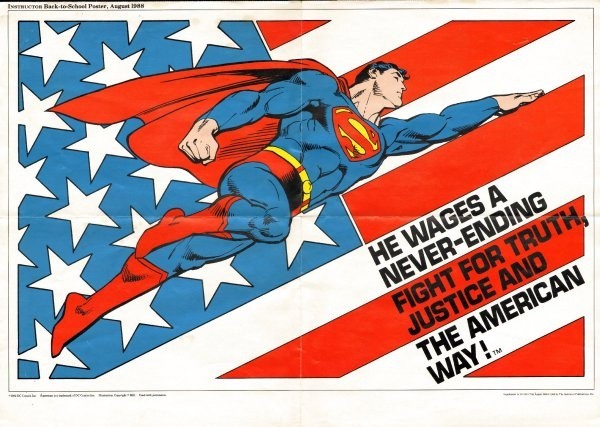
The former, originally published by DC comics in 1938, was an all-American superhero from the very onset. He wore the colors of the American flag as he fought for ‘truth, justice, and the American way’. And perhaps the most American thing about him was exactly what he had in common with everyone else in the country; he was an immigrant. Sent from his home planet of Krypton, he made the treacherous voyage as a child to come to the land of the free. Upon landing in Smallville, Kal-El was embraced by a blue-collar, Midwestern family who imbued in him the classical American values that would go on to become the mantra of his life. Upon successfully completing his schooling, Kal-El moved from the quaint hometown farming of Smallville to the complex and sophisticated utopia of Metropolis.

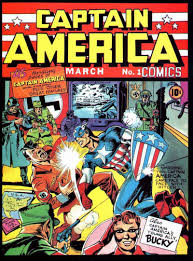
The latter, originally published by Timely comics in March of 1941, was an inspired piece of American propaganda. He was the literal ‘star-spangled man’, wearing the flag as a costume and debuting in an issue whose cover depicted him sucker punching ‘ole Adolf right in the kisser. It was a piece of entertainment and wish-fulfillment, allowing Americans the chance to see themselves as the heroes of a conflict that had yet to even become their own. Then, of course, a mere nine months later, the war became very much America’s own. The bombing of Pearl Harbor on December 7, 1941, put America squarely in the middle of the battlefield and Captain America followed suit. Timely comics lived up to their name, producing entertainment that was incredibly vital to its time period and sold well but was immediately dating itself even as it did so. Thus, when the war drew to a close, so too did Captain America’s popularity.

Both characters were founded upon the concepts of patriotism, but where Superman was steeped in a timeless sheen of manifest destiny-driven pride, Captain America was rooted in a specific time and place that left him feeling dated by the end of the decade. So, why is it that in 2018, the cinematic incarnation of Captain America is so much more socially relevant than the cinematic incarnation of Superman?

..

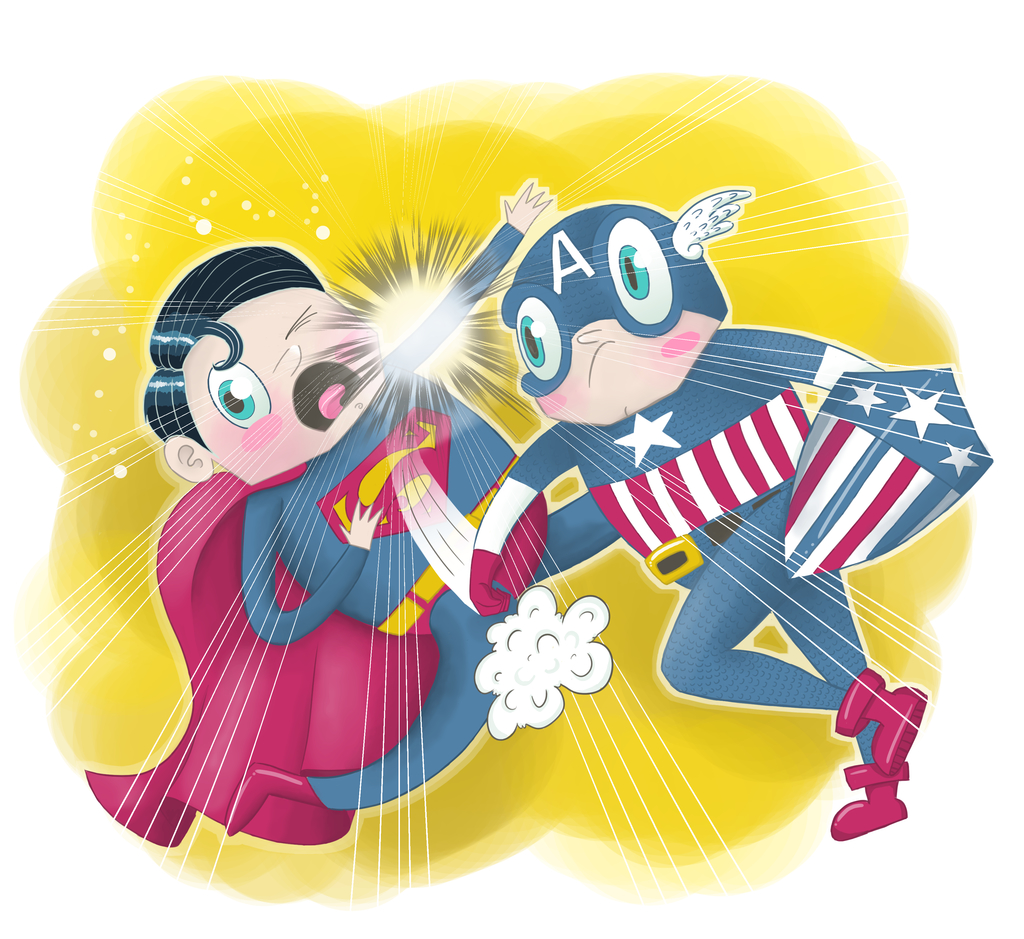
Original artwork by deadbinky.

Marvel and DC have obviously approached their cinematic universes in vastly different ways, on vastly different time-tables. For a frame of reference, Marvel released its first big-event crossover (The Avengers) the same year that DC released The Dark Knight Rises. That’s neither a positive nor negative, it’s simply a fact, but one that holds great importance. As DC released the final installment Nolan’s Batman trilogy, Marvel was six films deep into a film series that was still only beginning. From a financial perspective, for DC to not follow suit would be to actively throw money away. Especially considering that while Marvel was dealing with superheroes largely seen as B-listers such as Iron Man and Captain America, DC had pop culture staples such as Batman and Superman in their reservoir.

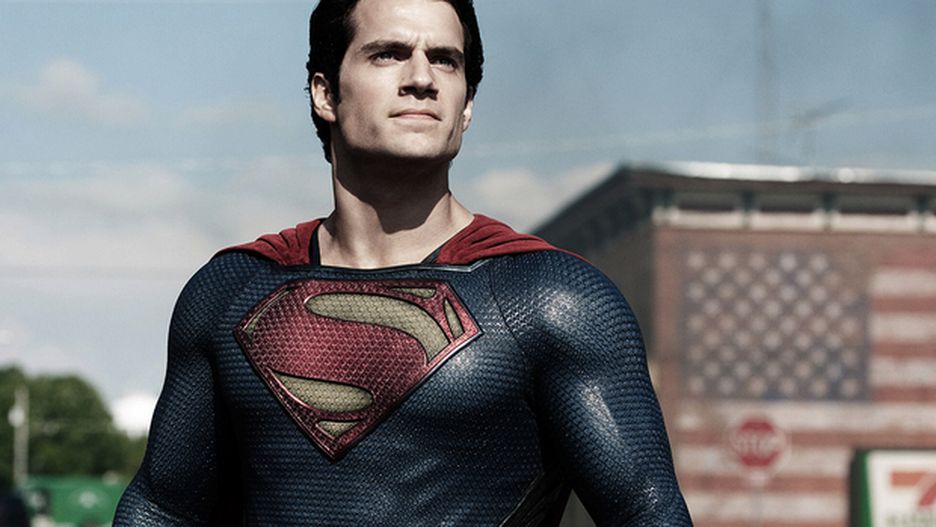
On June 14, 2013, DC released Man of Steel, a rebooted Superman film that had been in the works, in one way or another, for nearly a decade. The film was released to a widely split opinion from both critics and audiences but this did not stop DC from announcing less than a month later that they were shifting gears from simply making a Superman sequel to making Batman v. Superman that would lead into Justice League.

Again, neither a positive nor a negative, just a fact. But a fact that demonstrates the key difference between the approaches of these two studios: patience.

When comparing Man of Steel to Captain America: The Winter Soldier, the similarities are apparent. Both feature a protagonist removed from their homes, trying to do what is best in a world in which they do not feel at home until someone from their past resurfaces to haunt them. Both are actively working to deconstruct the American ideology upon which their characters were founded and examine how it works in a modern context, in both the text and the subtext. But for all of the similarities, the difference is what stands out the most and that is character.

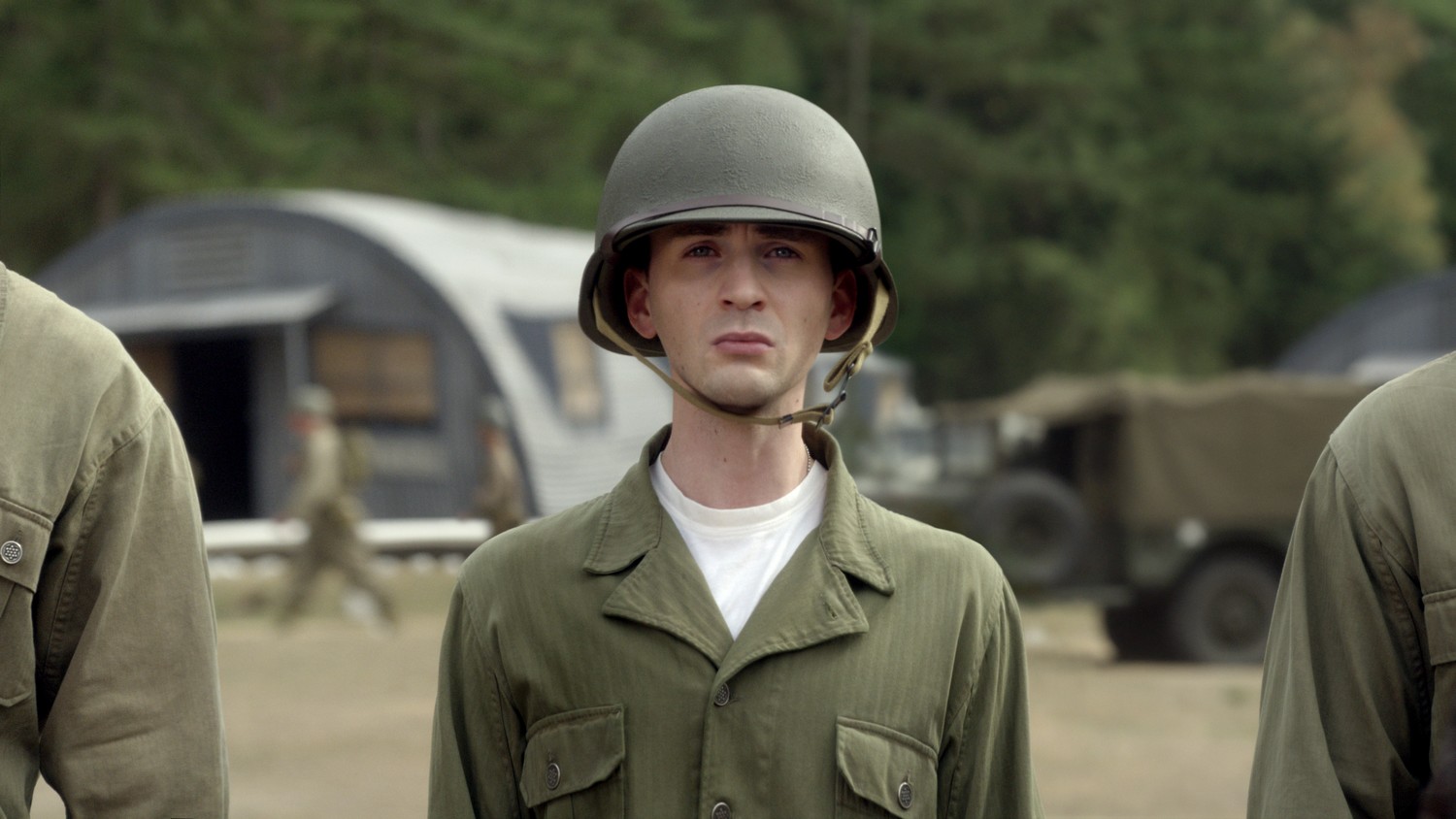
The Winter Soldier wasn’t Captain America’s first film. In 2011, Marvel released Captain America: The First Avenger, a film that thoroughly embraced that character’s origins. It was an all-out homage to the serialized tales of old that didn’t shy away from the less-than-modern aspects of the source material. Cap stands as a representation of classical American ideology; a scrawny kid from Brooklyn with a heart of gold who goes off to war and becomes a hero.

The First Avenger builds a relationship between us and Captain America and cements his ideology. Thus, when Winter Soldier rolls around, we experience the challenging of his morals and beliefs with him. On top of this, he becomes a literal embodiment of the values of old America clashing up against the values of new America. As he enters into a tale of political espionage, it is completely beyond his own understanding of what warfare is. And when it is revealed that institution he stands for, S.H.I.E.L.D., is nothing more than a front for the very villains he swore to defeat, it takes a toll on him and on us.

But Superman never had a First Avenger.

In the interest of making the character relevant to modern audiences, Man of Steel forces Kal-El to face challenges right from the get-go. The character is introduced to us as a down-trodden loner, far-removed from family or home, who is constantly on the run. This dynamic shift would be a powerful one if we knew what this version of Superman even stood for. But Man of Steel is so busy offering a modern, cynical foil to Superman’s classical beliefs that it forgets to actually give Superman those beliefs. It completely bypasses an entire section of Campbell’s ‘The Hero’s Journey’, in favor of immediately inserting audiences into the conflict of a second act.

Which is just a symptom of the larger issue: a complete lack of patience. It’s how you get a film that challenges a character on every level and yet fails to elicit any meaningful response. It’s how you get a foundation that is unfit to support years of cinematic adventures to come. And most notably, it’s how you get a The Death of Superman adaptation in the second film. Everything is accelerated, leaving little room for anything to have meaning, purpose, or relevance.

Meanwhile, Captain America is arguably more relevant than ever before. Because America, as a nation, is facing tremendous conflict right now. It’s not in the form of warfare that we’re used to. Instead, it’s the remnants of an evil we thought we had gotten rid of, that has instead just been festering within our institutions all of this time. He is the classic all-American hero, forced to come to terms with the reality of an America that is no longer the one he grew up believing in. 

‘Avengers: Infinity War’ Bored as Hell Review

“But wait?” the average reader might be thinking right now, “didn’t Big Shiny already post a review for Infinity War?” Why yes, we most certainly did, and if you haven’t read Bryan’s awesome review, you can check it out right here. But  considering this is the culmination of 10 years worth of movie making and nearly 20 films, we figured a multi-prong approach would be the best here and will be publishing various takes and critiques of the film.

So if you want to spend a more leisurely time strolling through the Infinity War garden, check me out on the Bored as Hell Podcast while I sit down with Andy, and we spend a good 40 minutes or so on a deep dive into the film and themes. And it’s as spoiler-free as possible, but we will discuss plot revealed in the trailers, so if you want to go in as blind as possible, maybe wait until after the movie.

You can find the podcast here, or check us out on iTunes and Stitcher!

‘Venom’ Trailer

Months ago we got our first look at Sony’s Venom. The short clip left many a fan feeling skeptical at Sony’s second attempt to realize the character after Spider-Man 3.

Today we got the first real trailer for the upcoming film, slated for October of this year. We see Eddie Brock (Tom Hardy) a reporter sleuthing out nefarious goings on within his city. Hardy seems somehow vulnerable, stepping into situations he isn’t prepared to handle, approached by someone from the Life Foundation who makes him aware of symbiotes. There are allusions to tragic human testing and Brock accidentally comes into contact with the organism from elsewhere.

He takes on a passenger within his own mind, the otherwordly entity, Venom. While he battles corporate entities bent on hiding the mistakes they’ve made, Brock seems an unwitting and unwilling participant in a situation well outside his kenning. He tries to direct the entity inside him.

If you’re going to stay, you will only hurt bad people.

Venom, however, sees things another way. “The way I see it,” it says “we can do whatever we want.” The Brock/Venom partnership seems a character of two minds and bodies. While Brock attempts simply to escape those who pursue him, Venom takes a more aggressive approach in putting an end to what ails them. The balance of Hardy’s vulnerability with Venom’s aggression promises an interesting dynamic that will not only redefine the character but show us a side of Hardy we’ve not yet seen.

That relationship overwhelms what appear to be some moderately cheesy action moments (Brock flying off his motorcycle and pulling back via symbiote appendage) and hints at a movie that just might have something worthwhile to offer. Despite their ridiculous pronunciation of SIM-BYE-OAT.