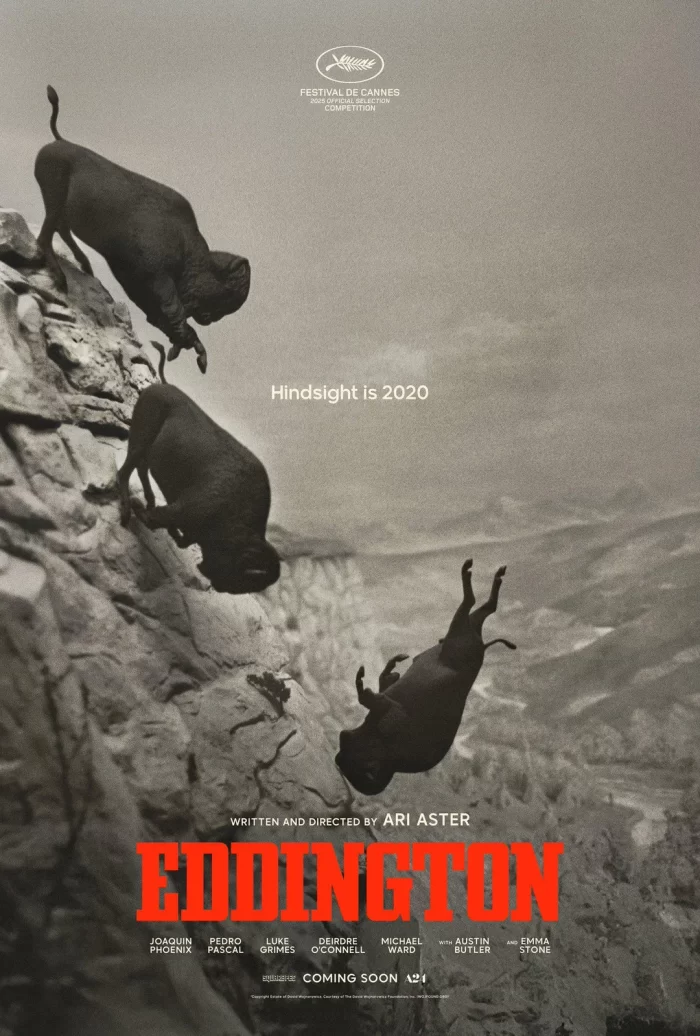
Ari Aster has proven himself to be one of the brightest minds of his generation in creating absolutely unnerving cinema. From the grotesque violence and the infamous death scene in Hereditary to showing us that even events that take place only in daylight can still be terrifying with Midsommar, Aster continually shows us ways to evolve the craft and take us to places that we would rather not be but are unable to look away from. Unfortunately, Beau Is Afraid was a huge letdown, and while its messages about anxiety and abuse were important, it rambled on and just became nonsensical. Eddington seeks to show some restraint over Beau, and while it is an important if not always enjoyable movie cut from his pedigree, it tries to cram too many ideas into one story and loses its focus.
It’s May 2025, and the COVID pandemic is still in its early stages, but even small-town Eddington, New Mexico is beginning to feel the effects of lockdown. Sheriff Joe Cross (Joaquin Phoenix) bristles under the mask mandate set up by mayor Ted Garcia (Pedro Pascal), and after an especially humiliating experience in a grocery store, he comes up with a perfect solution – become mayor himself. The problem is that not only is Garcia quite popular among the townsfolk, but many are rallying behind him in support of the COVID protection measures. Combine this with his family’s turning against him, the growing tide of protests and distrust of the police due to the George Floyd murder, and a double homicide, and Cross finds himself being pushed to his limits and over the edge.
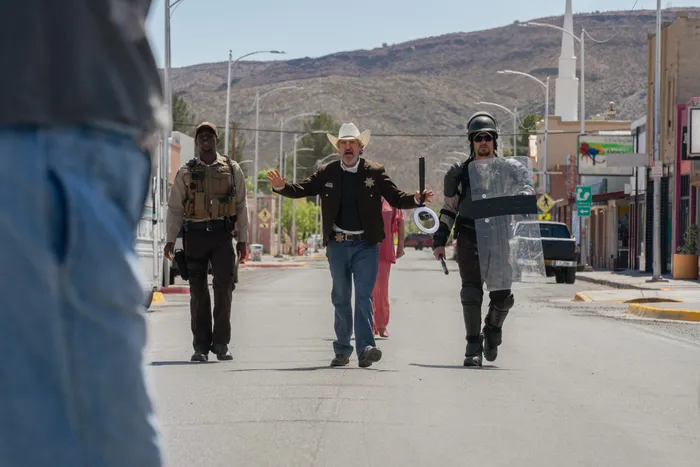
It’s quite strange to say that we have a period piece that takes place only five years ago, but that’s exactly what this is. The Pandemic permanently changed everyone, and its repercussions are still being felt across the world. Eddington exists in this bubble reminding us of all the hysteria, conspiracy theories, and nonsense that accompanied this indelible moment in history.
As Joe moves further and further into what feels like Q Anon territory (complete with the misused version/spelling of the word “your”), we are shown again of just how polarized we became during this era and that the scars of the us vs. them mentality we created are still prevalent today. Social media was one of the main reasons of how this divide was created, and it is fully indicted here as well. Posting incendiary videos and photos just for a few likes or public reactions are one of the many ways that we see our characters pushed to the brink and beyond. While that never excuses their actions, it asks if the people behind the screen shouldn’t also bear some brunt of the responsibility as well.
The performative activism of white people protesting and supporting Black Lives Matter is also put on full display and questions their “beliefs” and whether they were devout or merely seeking attention. The way they almost viciously attack a black deputy for not jumping in and protesting with them is one of the most damning demonstrations of how frivolous much of this grandstanding was. Never forget that people will often try to make issues about themselves even if they have no business being in that space to begin with.
Throw in the enigmatic specter of Antifa, the deification of someone like Kyle Rittenhouse, and the demonization of violent video games, and you have a movie so chock full of ideas that it is overwhelming.
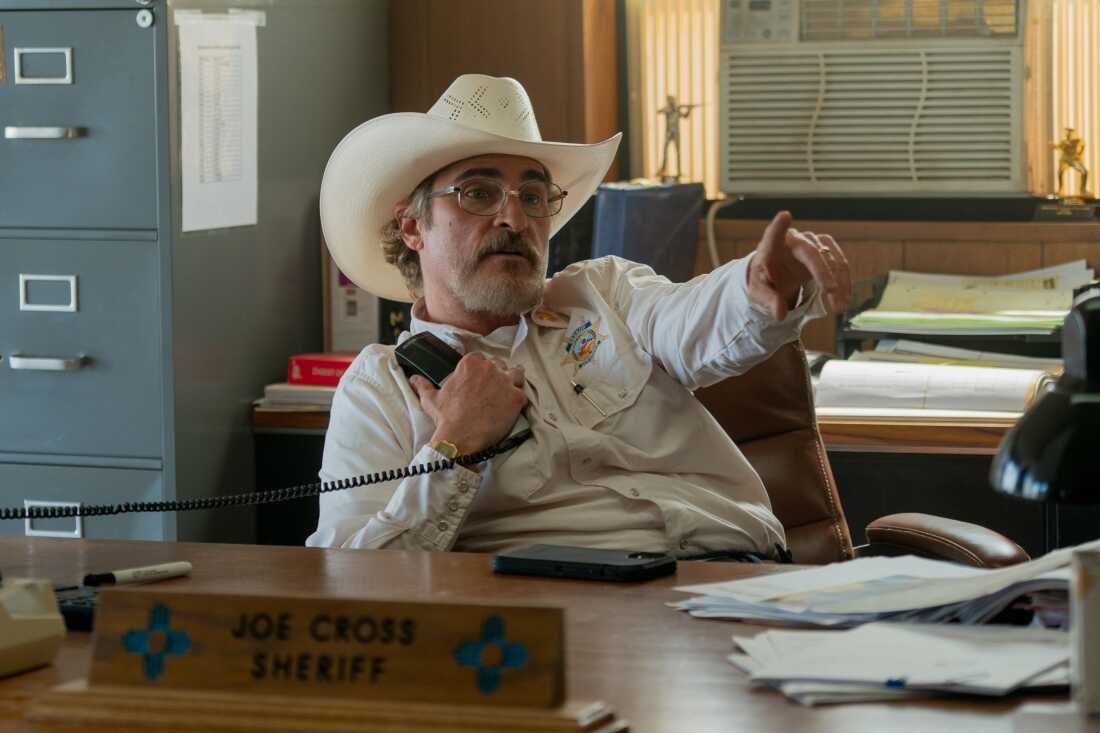
And therein lies the problem. Eddington is extremely well-made and lovingly echoes some of the best of the Coen brothers (with some David Lynch thrown in for good measure), however, there is just too much going on. Jumping from theme to theme every five minutes is disjointing and instead of fully making its point, it feels more like a springboard for future conversations.
And maybe that was the point. Rarely do critics stick around after a screening to talk about a movie for very long, but this one sparked at least a half hour of discussion around not just the filmmaking aspects but also what the actual meaning of the film was. And despite common observations, most had thoughts that brought new light to the others that was unexpected. So if this truly was Aster’s goal, then he accomplished it for us, but are most people going to do the same thing or just think it was weird and never talk about it again?
Despite all the above, I did truly enjoy Eddington as it’s something I will be mulling over for a long time to come and honestly would look forward to talking about it with more people. The problem is that those who need to see it probably won’t, and the ones who do can easily take a surface level view of it due to its inherent weirdness. Whether Eddington comes too soon or too late is hard to tell, but its story speaks volumes about society and hopefully serves just as a reminder of our mistakes and not a portent of what is yet to come.