Tag Archives: Movies
Guy Ritchie to direct “Lobo”
By Ryan Thomason on September 2, 2009 in Comics Movies NewsHollywood Reporter gives us a scoop on the newest DC comic to movie adaption, production is set to begin early next year.

Superman/Batman: Public Enemies Q&A: Actor Clancy Brown
By Tyson Huber on September 2, 2009 in Comics Interview Movies Television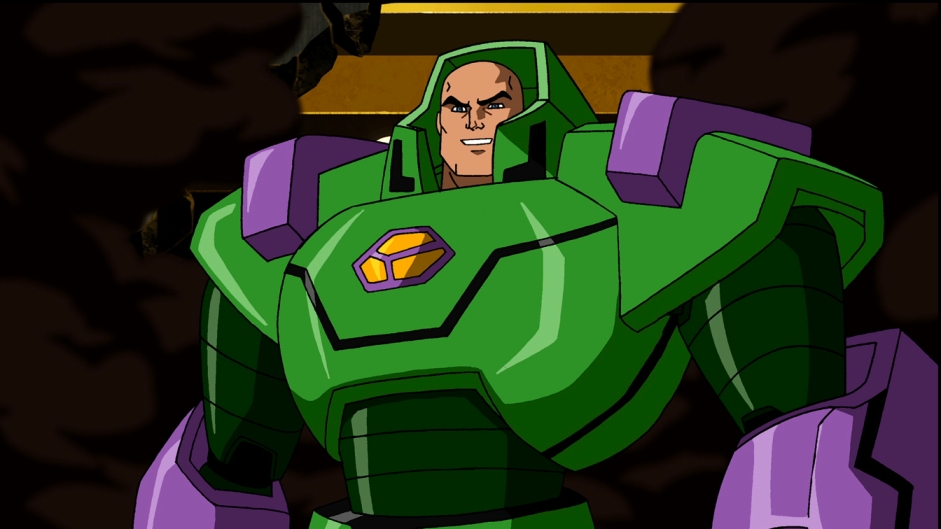
Warner Bros. have been kind enough to provide yet another Q&A for the forthcoming Superman/Batman: Public Enemies which is coming to DVD and Blu-ray on September 29! This time Clancy Brown, who plays Lex Luthor in the film, sits down to talk about his role in the next DCAU feature film -and the man knows what he’s talking about… he’s voiced nearly 500 animated episodes and films!
About the Film:
The film may be called Superman/Batman: Public Enemies, but this is a tour de force for Lex Luthor – and Brown’s intonations captivate during every moment Luthor is on screen. In the film, Luthor has been elected President of the United States, and he uses the oncoming trajectory of a Kryptonite asteroid to frame Superman and declare a $1 billion bounty on the heads of the Man of Steel and his “partner in crime,” Batman. Superman and Batman must unite to stave off the pursuit of heroes and villains alike, stop the asteroid, and uncover Luthor’s devious plot to take command of far more than North America.
About Clancy Brown:
Voicing Lex isn’t Brown’s only upcoming starring role. Fans will get a healthy dose of Brown on large and small screens in the coming months as he appears in both the remake of A Nightmare on Elm Street and in the Matt Damon vehicle The Informant!, as well as starring in ABC’s primetime law office drama, The Deep End.
Brown was cast as a villain in his very first theatrical role opposite Sean Penn in Bad Boys, and then forever sealed his place in fantasy villainy as The Kurgan in Highlander. Before playing an immortal, though, Brown etched his name in cult classic history as Rawhide in The Adventures of Buckaroo Banzai Across the 8th Dimension.
Beyond Highlander, Brown is regularly recognized from his standout performance as Captain Hadley in The Shawshank Redemption, as the centerpiece of HBO’s Carnivale as Brother Justin Crowe, and to fanboys across the planet as gung-ho Sgt. Zim in Starship Troopers.
While he has voiced nearly 500 animated episodes and films, Brown is best known by the younger audience as Mr. Krabs in SpongeBob SquarePants. He is widely recognized as the quintessential Lex Luthor in Superman: The Animated Series and Justice League/Justice League Unlimited, and he has scored kudos for his voicing of Mr. Freeze in The Batman, George Stacy/Rhino in The Spectacular Spider-Man, Long Feng in Avatar: The Last Airbender, Captain Black in Jackie Chan Adventures, and Mister Sinister in Wolverine and the X-Men. His voice credits, to list just a few, include roles in Phineaus and Ferb, Ben 10: Alien Force, Kim Possible, Duck Dodgers, Teen Titans, Buzz Lightyear of Star Command and Gargoyles.
Brown made his TV debut in an episode of the The Dukes of Hazzard, and has since been seen in primetime guest appearances and recurring roles on series as varied as Law & Order, ER, Lost, Star Trek: Enterprise, The Practice, The Outer Limits, Tales from the Crypt and China Beach.
Q&A
QUESTION:
After nearly two decades voicing Lex Luthor, are there any challenges to creating this character?
CLANCY BROWN:
I’m pretty comfortable doing the voice of Lex, so the only challenges come from the script – and the Public Enemies script is tremendous. I think it suits everybody involved. It suits Kevin (Conroy). It suits Tim (Daly). It suits me and the voice characterizations that we created, you know, back right before the Civil War. I think that was when we started doing this. So there’s not really much challenge to it anymore – it’s just a lot of fun now, and especially when you get to do it with Kevin and Tim and Andrea (Romano) and Bruce (Timm).
QUESTION:
Can you remember your initial audition for the role of Lex Luthor?
CLANCY BROWN:
Warner Bros. had been doing Batman and it was very successful, so they were gearing up this new iteration of Superman. They decided to sort of go outside the box as far as talent was concerned, and I had made it known that I wanted to do more voice work. I wasn’t very good at it, but I wanted to get better. I enjoy cartoons and animation, and comic books were part of my life growing up. So they said “Come on in, We’re trying to cast Superman.” So I went in and just blew them all away with my Superman. And then they said “Here’s an idea (he laughs) nobody has ever thought of: What if Clancy played the bad guy?” (he laughs harder) So I rolled my eyes and said, “Can I, just one time, play the good guy?” And Andrea said, “No, you can play Lex.” So I said, “Fine, I’ll play Lex.” Honestly, Lex is fun. I’m very happy to be Lex. It’s a lot more interesting than Superman to me.
QUESTION:
Your counterparts in this film both say you have the glory role with Lex. How do you respond?
CLANCY BROWN:
That’s because they always play good guys! They always play the heroes. Nobody knows what it’s like to be the bad man … behind blue eyes (he laughs). But I know. All too well.
QUESTION:
What exactly is it that makes you the definitive voice of the character for the fans?
CLANCY BROWN:
What I do with Lex, to me, is no different than how I always viewed Lex. I thought the early Super Friends animation of Lex was kind of lacking in many aspects. It’s fun to watch – it’s campy and all – but Lex wasn’t quite what I thought Lex should be. So when this started, you had this accident of everybody kind of being on the same page about what the story was and who the characters were. I just went in and did what I’ve thought Lex always should sound like. I totally enjoyed Gene Hackman’s portrayal of Lex Luthor, but it wasn’t a Lex that I was ever afraid of. I enjoyed Kevin Spacey in the newest film, but again, that wasn’t the Lex that I thought made a good opposition to Superman. Lex is the bad guy. He’s the archetype. He’s everything that’s ugly about who we are as people. But he is also what is seductive about that side, which is the wealth and the power. He’s Darth Vader. Oh man, there’s the one I should’ve played – Darth Vader. Darn. Missed opportunity. Okay, so what do I bring to Lex? I don’t know. I’m just lucky enough to have a low voice and the highfalutin idea to play Lex where I think he should be. After that, it’s all about the quality of the scripts.
QUESTION:
Where did you get that idea of what Lex should be?
CLANCY BROWN:
The vision was so clear in the original comic books and throughout the ’40s and ’50s and ’60s, as you saw him develop and become what is frightening about all the things that we want, and the sins that we have to commit in order to achieve that money and power. Of course, Lex has no problem with any of those sins – he’s quite at ease with running a corporation that has no conscience. What is seductive about Lex is that he is unremorseful. He is simply doing what he thinks is best. Does he think he’s a bad guy? No, of course not. But he doesn’t pretend to be a good guy. To him, it’s an immoral world anyway, and that people try to lay morality and ethics over the human action is just foolish. You can’t accomplish anything that way. The only way you accomplish something is to jettison all of that spirituality, all of those morals and ethics, and get on with business.
QUESTION:
Like Bruce Wayne, Lex is wealthy beyond means, has unparalleled intelligence, and no superpowers. Does that make Lex the anti-Batman?
CLANCY BROWN:
What does Kevin (Conroy) always say about the duality of Batman? There’s a real dark side of the Dark Knight. Maybe Lex is a day bat. It would be more interesting to have Lex in Batman’s world, wouldn’t it? I hadn’t actually put that together because I don’t care about the bat world – it’s all Metropolis for me (he laughs). Boy, when you think about it, super powers are kind of a cop out. They’re not real. What’s real is what Batman does, although he dresses funny. So what’s really real is what Lex does, thought he doesn’t go to the gym as much, you know? That’s probably why both of them are attractive – because you can conceivably become Batman or Lex Luthor, but you can’t really be from Krypton.
QUESTION:
The title is Superman/Batman: Public Enemies, but that’s not what this film is all about, is it?
CLANCY BROWN:
It’s the Lex Luthor story. It’s always the Lex Luthor story. Superman would have nothing to do if Lex wasn’t out there stirring it up. And you never know what Lex is up to – he doesn’t ever really go through a character arc. You can depend on the fact that he’s self-serving, that he’s got his own agenda, and you really can’t trust anything he says. It’s always interesting to see how he manipulates everybody around him and how he’s reinvented himself this next time. He’s benevolent, he’s a humanitarian or, like in this film, he’s an experienced politician and the right man for the right job. He tends to fool most of the people most of the time, but he doesn’t ever fool Superman … (he laughs) or me.
QUESTION:
Tell us about this voice cast reunion.
CLANCY BROWN:
Working with Tim and Kevin is so much fun. Tim’s got a day job (ABC’s Private Practice) and so he couldn’t be there when we started recording. I don’t think I’ve seen Kevin for 10 years because he lives in New York and Lex and Batman didn’t do much together anyway. But I always enjoyed it when Kevin was in town because I kind of knew him from even before Batman. He’s a great guy and I love him, so I’m always glad to see him. Kevin has a terrific energy, and I always loved what he did with Batman. I always enjoyed the times that we’ve actually been able to mix the worlds. Tim is a different story. We had a few years together doing this material, and there was a rapport there that kind of instantaneously came back.
What was interesting is that Kevin and I were there early and we recorded most of the script. And then Tim came in later, and we ran through the script for some filmed publicity materials. We sort of pretended to do a rehearsal for the camera. And as I’m sitting there listening to Tim and Kevin, I’m thinking, “Wow, they’re better. (he laughs) Kevin’s actually doing it even better. And I’m listening to myself and I’m thinking, “Wow, I’m actually better because Tim’s in the room.” The energy of having everybody there from so long ago was tremendous – we had this wonderful performance rapport with each other. So we ended up staying and recording the whole thing again. And I’ll tell you what – anytime Tim Daly or Kevin Conroy wants to join me for any job, I’ll be happy to have them on the set, behind the mic, whatever. I’ve got to read some stories to my son’s kindergarten class and I’m thinking I may have to call up Tim or Kevin and see if they want to come in because I know, just because they’re in the room, that I’ll do a better job than if I tried to do it alone.
QUESTION:
What does Tim Daly bring to Superman?
CLANCY BROWN:
I don’t want to imply anything about the other guys that have played Superman, but for me, Tim was the guy that started it. So he’s always the voice of Superman. I know George (Newbern) well, and I love George and I think he did a terrific job. But Tim’s Superman sort of set the standard for this generation.
What I get from Tim’s performance is that it’s very grounded. It’s very real. We can imagine ourselves as Batman or, in an absurd world, we could be Batman or Lex. But even in an absurd world, nobody can be Superman. So you need somebody that’s actually going to humanize Superman, and Tim manages to do that. Maybe it’s in the timber of his voice or the choices he makes in inflecting, or the intelligence that comes across or just the ease of his delivery. It’s probably a combination of all of that and a lot of stuff I haven’t mentioned. But he was a real good choice from the get-go, and he still has it. He still carries it with him. Plus, I think he’s still only about 28 years old – he hasn’t aged a bit. He said he has a 19-year-old son, but I don’t believe it.
QUESTION:
And what makes Kevin Conroy the definitive voice of Batman?
CLANCY BROWN:
It’s hard to imagine any other voice coming out of that cowl. The live action guys sounded like who they are. They didn’t sound like Batman. What’s interesting is that Kevin is not like this personally at all, so I don’t really know where it comes from. But his voice carries this dryness and sadness and, I would say, humorlessness. But it’s not humorless. It’s like it’s been ripped out of him. There’s kind of a fatalistic thing that’s communicated just in the sound of his voice. That’s why it’s always is a little weird when this Batman says anything that has humor or is pithy. Kevin’s voice actually manages to take the pith out of the pithy. Kevin has the same thing in his voice that William Holden had on screen. It’s this kind of don’t-mess-with-me gravitas, I’ve been there, I’ve seen it, I’ve been happy-go-lucky, I’ve been drunk in the streets, and I’ve seen it all. So when I talk, you listen. Kevin just holds you that way, and he does it with his voice. I never heard anybody like that. It’s like the perfect match of voice to character with Kevin in Batman. You can’t get better than that.
QUESTION:
Can you explain the genius of Bruce Timm?
CLANCY BROWN:
I can’t explain the genius of Bruce Timm. I can’t explain the genius of Steve Hillenburg (creator of SpongeBob SquarePants). I can’t explain how these guys just seem to create and continue to refine and then recreate and build and define a cultural icon and these worlds that capture the imagination. They’re just completely in their head. There’s not a lot of ego – or it’s not offensive ego. That’s one thing I know for sure. And it isn’t an ugly obsession. There’s an ease with it. They dig it. And they have the talent and brainpower to pull it off. I don’t know how Bruce does it. He always astounds me. He’s one of the real deals. It’s great that he’s with Andrea (Romano) because they enable and support each other. That’s greater than the sum of its parts every single time.
QUESTION:
The fans call you the quintessential voice of Lex Luthor. Do you feel some sense of ownership for the role?
CLANCY BROWN:
I respect it, but I think it goes like this: when I was growing up, the greatest basketball player was Julius Erving or Kareem Abdul-Jabbar. For my daughter, it was Michael Jordan. And now, for my son, it’s going to be Kobe Bryant or Lebron James. Whatever comes next for this generation, that’s going to be the greatest voice. I think it’s the greatest iteration of this cartoon, and I’m immensely grateful and feel very fortunate that I’m part of it. I think it’s going to be tough to top this version of Superman, even by any other medium. I don’t think you’ll get a live action version that could be as good as this world.
QUESTION:
How did comics fit into your childhood?
CLANCY BROWN:
I would go down to Main News and flip through the comic book rack. It was always fun — a nice little escape. Because I could never bring them home. I would buy them, and actually sit there and read them until Mr. Miller would say, “You know, (he laughs) I don’t run a library.” I’d try to figure out if I wanted to spend my nickel on a candy bar or a comic. And I would be a rich man today if I had all those comics. I read Superman. I didn’t read Batman. I liked DC Action Comics. I read Marvel, too, but I was not a Spider-Man guy. I did like Iron Man a lot.
QUESTION:
Why couldn’t you bring comics home?
CLANCY BROWN:
Because serious people didn’t read that stuff. (he laughs) I had homework to do. I had piano to practice. I had chores around the house. I couldn’t waste my brainpower reading that stuff. It would rot my brain. Everybody knows that (he laughs hard).
QUESTION:
How do you get into voice acting, and what made you stay?
CLANCY BROWN:
Getting into voice acting was a completely practical decision on my part. My daughter had just been born. I wanted to stay in town. It was something that I hadn’t done before and I had a little bit of a presence in film and television that I could actually use as leverage to break through some of the barriers to doing voices. So I did that.
What I love about voice acting is really that the people involved are just so much fun. They’re all good guys – there’s nobody I don’t like. Whenever I walk into a room, I’m happy to see whoever is directing, whoever is producing, whoever’s acting. And it’s usually a lot of fun. I remember when I was the new person in the cast, I was just overwhelmed by the talent that was in the room and all I could think was “Man, I hope they invite me back because this is just too much fun.” And so they kept inviting me back. I can’t imagine every getting tired of it.
For more information, images and updates, please visit the film’s official website at www.SupermanBatmanDVD.com.
Kick-Ass Gets a Release Date
By Bryan Young on September 2, 2009 in Movies News
Slashfilm is reporting that one of the hot contenders for Best Picture 2010 (in geekland anyway), Kick-Ass, is going to be released on April 16th, 2010.
During the Comic-Con panel, Matthew Vaughn stated that the film would be ready for release early next year. (You can read our full-coverage of that panel here.)
I’m always wary of films that get released in that pre-summer dumping ground, but the Comic-Con panel has me convinced of this one. I’m writing it down in my calendar and I’m planning on being first in line.
First Official Look at CGI Smurf!
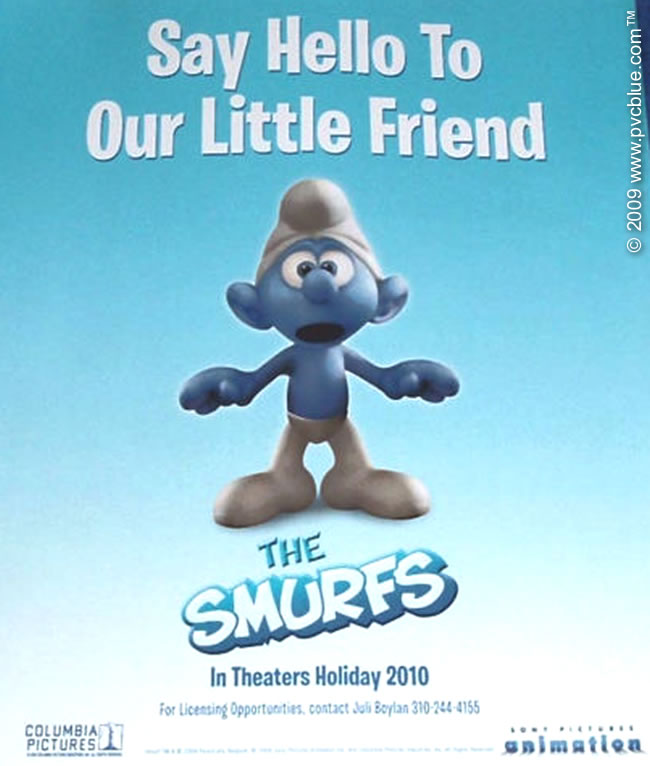
By Tyson Huber on September 1, 2009 in Movies NewsThe folks over at pvcblue.com have posted this first official image (found in a magazine) of a CGI Smurf for The Smurfs movie coming on December 17 2010.
FOX to Reboot Fantastic Four
By Tyson Huber on September 1, 2009 in Comics Movies News
Variety is reporting that FOX is set to reboot the Fantastic Four franchise and give it a fresh start. While Akiva Goldsman is set to be producer, the same guy who wrote the script for the forth-coming Green Lantern movie, Michael Green, is on board to write the script.
The 2005 “Fantastic Four” and 2007 sequel “Rise of the Silver Surfer” were directed by Tim Story and starred Ioan Gruffudd, Jessica Alba, Chris Evans and Michael Chiklis. Since the deals for the reboot are just getting made, it is unclear if any of them will return.
Though Marvel Entertainment owns and finances properties like “Iron Man” and “Thor,” Fox controls “Fantastic Four” in perpetuity — as long as it continues making the films. Fox has the same arrangement on Marvel Comics properties “X-Men,” “Daredevil” and “Silver Surfer.” Marvel is a producer and financial participant through a licensing agreement.
It’s no secret that both F4 films were less than… “Fantastic” (I’m sorry, I couldn’t resist.) but does FOX really have the chops to “reboot” a bad set of films they were responsible for in the first place? Of all the studios that own Marvel characters, it has been FOX that I have been the least impressed with. I’m hoping that maybe, just maybe, one of these days FOX will hit their stride and put together some great Marvel movies as they did with the first two X-Men films. Of course, in an ideal world, Marvel would use their newfound parent company, Disney, to buy back some of these properties and keep everything in house (which would be sure to incite more bitching and moaning about how people think Disney will ruin their beloved Marvel characters), but it seems for the time there are no plans to do so.
And in the mean time, this robot is left wondering when his beloved Daredevil will finally get a second chance…
DVD Review: Dark Rising
By big-shiny-robot on August 31, 2009 in Movies Reviews
Dark Rising is a movie that attempts to be one of those B-movies that’s awesomely bad on purpose in attempt to be funny, and/or to become a cult hit. However, this is a tough thing to acheive and usually doesn’t happen intentionally, and when a film does try intentionally it tends to fial miserably. This is exactly where Dark Rising ends up -it’s a movie that is just… awful. Proletaria-Tron reviewed this movie over at Examiner and you can check out his full thoughts on the movie there!
The male lead character of Jason (Landy Cannon) is introduced to us as a guy whining to a little girl about his ex-fiancé, Jasmine (Vanessa James), not wanting to marry him. Turns out she’s a lesbian and throughout the movie this is shoved down our throats, to the point of a lesbian sex scene that doesn’t fit the movie at all. Jason isn’t likeable at all. I was hoping he would die from the start. He’s awkward, whiny, and unfunny and never really redeems himself in any way. He’s also dressed like 1994 and looks like he’s around 40 years old. Jason’s buddy Ricky (Jason Reso or Christian Cage in the wrestling world) is along for the camping trip too, he’s slightly better than Jason at acting but I think that’s due to his long career as a professional wrestler (a 6 sided cage match of his is a special feature). He’s mostly around to be funny -but isn’t- and is mostly just creepy and also looks to be about 40 years old. The problem with that is all the girls look like they are in their 20’s. Jasmine and Jason are supposed to be high school sweethearts, and they aren’t even close to the same age. Marlene (Haley Shannon) is Jasmines lesbian girlfriend and basically is only around to take her shirt off and then die.
TRAILER: The Men Who Stare at Goats
By Bryan Young on August 28, 2009 in Movies News
It isn’t often that a movie trailer catches me off guard. Most of the time I’m excited for a film long before any trailers come out, which I blame on our ridiculous Internet culture. But the first I heard of this film was today, when I saw the trailer, and I have to say that I am pleasantly surprised. The Men Who Stare at Goats is hilarious.
And Clooney as a Jedi? Brilliant.
Just watch it. I think this looks fantastic.
Superman/Batman: Public Enemies Q&A: Screenwriter Stan Berkowitz
By Tyson Huber on August 28, 2009 in Comics Interview Movies TelevisionScreenwriter Stan Berkowitz is no stranger to the DC Animated Universe. Last year he adapted the successful Justice League: The New Frontier and now he has adapted the Jeph Loeb story of Superman/Batman: Public Enemies for DC’s next PG-13 animated movie. Berkowitz has been writing for over 30 years, but the last 12 of those have been focused heavily on the animated front. With writing credits on Superman: The Animated Series and Batman: The Animated Series and the more recent Legion of Super Heroes Berkowitz definitely knows what he’s doing when it comes to adapting these stories.
Warner Bros. has been kind enough to provide us with a lengthy Q & A with Stan Berkowitz in which he talks about the differences between his film and the original graphic novel by Loeb, the importance of great voice actors and directors, and more!
Superman/Batman: Public Enemies will be available on DVD and Blu-ray on September 29, 2009 and is available for pre-order now!
About Superman/Batman: Public Enemies
In Superman/Batman: Public Enemies, United States President Lex Luthor uses the oncoming trajectory of a Kryptonite asteroid to frame Superman and declare a $1 billion bounty on the heads of the Man of Steel and his “partner in crime,” Batman. Heroes and villains alike launch a relentless pursuit of Superman and Batman, who must unite – and recruit help – to stave off the action-packed onslaught, stop the asteroid, and uncover Luthor’s devious plot to take command of far more than North America.
About Stan Berkowitz
Berkowitz has been actively writing for 30 years, focusing his efforts on animated properties for the past dozen years. His animated credits range from Superman: The Animated Series and Batman: The Animated Series to Justice League, The Batman and Legion of Super Heroes, with stops on shows like Static Shock, Batman Beyond and Spider-Man along the way. Prior to moving into the animated realm, Berkowitz garnered credits writing episodes of T.J. Hooker and the latter-day versions of Dragnet and Adam 12.
Q & A with Stan Berkowitz
QUESTION:
Why was this story right for you?
STAN BERKOWITZ:
I love the political aspect of it. In the comic book that Jeph Loeb wrote, it was assumed that everyone knew the backstory to how Luthor got elected President. an and declare a $1 billion bounty on the heads of the Man of Steel and his “partner in crime,” Batman. Heroes and villains alike launch a relentless pursuit of Superman and Batman, who must unite – and recruit help – to stave off the action-packed onslaught, stop the asteroid, and uncover Luthor’s devious plot to take command of far more than North America.
About Stan Berkowitz
Berkowitz has been actively writing for 30 years, focusing his efforts on animated properties for the past dozen years. His animated credits range from Superman: The Animated Series and Batman: The Animated Series to Justice League, The Batman and Legion of Super Heroes, with stops on shows like Static Shock, Batman Beyond and Spider-Man along the way. Prior to moving into the animated realm, Berkowitz garnered credits writing episodes of T.J. Hooker and the latter-day versions of Dragnet and Adam 12.
Q & A with Stan Berkowitz
QUESTION:
Why was this story right for you?
STAN BERKOWITZ:
I love the political aspect of it. In the comic book that Jeph Loeb wrote, it was assumed that everyone knew the backstory to how Luthor got elected President. But we needed the movie to show an audience, who might not be familiar with the comics, exactly what would have to happen for Luthor to be elected. I sort of envisioned Luthor ascending to the Presidency somewhere around 2012. I didn’t quite predict the catastrophe we’d be seeing in 2008. But I figured that something bad would happen, and then Democrats would be elected in 2008, they wouldn’t be able to solve the problem and, in 2012, a tough, Ross Perot-style third party bid would be the one who’d be elected.
It was kind of fun for me to envision the political atmosphere that would have to take place in order for that to happen. And I also had a wonderful time going with Jeph’s depiction of Luthor’s descent into insanity – always keeping in mind that Clancy Brown would be enacting the dialogue. It was just great to write that.
QUESTION:
Superman/Batman: Pubic Enemies follows Justice League: The New Frontier as your second DC Universe film adaptation of a classic DC Comics graphic novel/com series. Are there specific challenges to adapting a well-known story?
STAN BERKOWITZ:
Each adaptation is different, and presents different challenges. In New Frontier, the challenge was compressing all the material into a coherent 75-minute story. In Public Enemies, the challenge was making the thematic concerns concrete because the comic author had the luxury of a narrator to talk about the themes. And when we did the screenplay, we had to show the themes in action, having things happen to illustrate those themes.
For Public Enemies, there was also the issue of credibility. We were concerned that if a person who vaguely knows Superman and Batman grabs this off the shelf and sees Lex Luthor as President, he might think, “hey, what’s going on here?” It might just put them off, or make them think this was an alternate world story. And that’s not how it’s advertised. The other credibility issue is that in the comic, Luthor believes that the meteor is coming to Earth because of Superman. As a reader, I could not get past the fact that the public buys Luthor’s explanation. I didn’t believe an audience watching this as an animated production would buy Luthor’s explanation. So Alan (Burnett) and Bruce (Timm) and I had to figure out an alternate way for Luthor to frame Superman. I think it worked very well.
QUESTION:
What makes Lex Luthor such a great villain?
STAN BERKOWITZ:
I think anytime you do a story, you have to ask yourself, “What does the villain want?” And the more complex the villain, the more unusual a thing it is that he wants – and, thus, the better the story will be. In Luthor’s case, he’s like Salieri to Superman’s Mozart. Salieri would have been the era’s greatest composer had it not been for Mozart, and Salieri knows this. In the same vein, Luthor would have been the leading light of our generation except for Superman, and there’s nothing that he can do about it. He’s cast into the shadows, and that’s why he has that pathological hatred of Superman.
QUESTION:
You’ve written Batman, and you’ve written Superman. Now you’ve gotten to write them together? What’s that dynamic like to combine them and use that chemistry to bring out the personalities?
STAN BERKOWITZ:
Well, Batman and Superman are opposites. Superman has always been presented as the character from the light, the daytime; Batman from the nighttime. They have decidedly different outlooks. Superman is the ultimate kid from Kansas, who had a real healthy upbringing. Batman is the tormented orphan. In a way, Superman’s outlook is too sunny, and Batman’s is too dark. The two of them work against each other, trying to temper each other’s attitude.
Superman wants to cheer up Batman to a certain extent, and Batman wants to make Superman aware that there is a darker world under what Superman normally sees. It’s fun to create banter between them. It was also fun to adapt the banter that was in the graphic novel, and we used a lot of it. Jeph’s words were so good, we just pulled dialogue directly from the pages of the novel.
QUESTION:
Are you thinking of the cast’s voices when you’re writing and, if so, does that help you write?
STAN BERKOWITZ:
I’m definitely thinking of the actors’ voices. Not to denigrate Superman and Batman, but this is Luthor’s story. Luthor has more dialogue than either Batman or Superman. And frankly, I actually gave him even more dialogue in those long speeches because I was hoping Clancy Brown would get the part, which he did. It’s so pleasurable to watch – and hear – Clancy do those Luthor lines, to watch Clancy’s descent into madness. It just brought me back to the days when I got into this medium in the first place. Suddenly, I was just a 13-year-old with a movie camera having fun with my friends and doing these little movies. It had that same visceral pleasure for me. Tim (Daly) and Kevin (Conroy) are sensational, too – those were also the voices I had in mind while I was writing. But this really is Clancy’s vehicle this time.
QUESTION:
Do you remember your first experience with Superman and with Batman?
STAN BERKOWITZ:
Easily. The reason I remember this so well is that when I started working on the show Superboy in Florida, I was flown to New York to meet Mike Carlin and Andy Helfer at DC Comics. And we talked for most of the day about the Superboy show and then they just casually mentioned, “Oh, by the way, we happen to have a library here of all the comics that DC has ever done.” Well, I got to go see it. I went into that library and found the very first two comics I’d ever gotten. One of them was an issue of Batman Detective Comics with a character called Garth, and it involved a crossbow being used to kill someone in an empty room. The strings had been held back by a cake of ice. And when the ice melted, the crossbow let go and killed the guy sitting in this deserted room. And the other one was a Superboy Adventure Comics from August of ’58, where Superboy played all the positions on a baseball team, thanks to his super speed. And I remember I’d been sick in the evening, and my father went out and got the medicine for me, and also picked up those two comic books. So it was kind of cool, almost like reaching into a time capsule, because I hadn’t seen the comics in over 30 years.
QUESTION:
What is your strength in this industry?
STAN BERKOWITZ:
I think part of my strength is work habits. One of the lessons I learned from my very first job after film school was from Russ Meyer. He said that from the time you wake up ’til the time you go to sleep, when you’re on a show, the show owns you. You don’t own the show. There’s no going home at 6:00 at night. I have no idea if there’s any creativity involved (he laughs), but I’m fairly certain that the conscientiousness might explain some of the longevity.
QUESTION:
Which presents more challenges: writing an original Stan Berkowitz story or adapting someone else’s work?
STAN BERKOWITZ:
Doing an original presents more challenges. The adaptations are already there – the studio knows they want to do it. In both the case of New Frontier and Public Enemies, I was approached by the studio and asked if I wanted to adapt them. Getting your own thing off the ground is much, much more difficult because even in our little world of animation, the, pre-selling is an important factor. And in both the case of New Frontier and Public Enemies, you had best-selling comics that the fans already knew.
QUESTION:
What’s the perfect environment for you to write in?
STAN BERKOWITZ:
I like an empty room, and that’s all I really need because there are absolutely no distractions. No TV, no internet, just a quiet room. It works for me. And it helps me to work faster. From the day they decided to do Public Enemies until the day that the first draft of the script was ready, it was exactly 60 days – which is really, really fast for a feature-length project.
When I started writing in film school, I’d have the TV on. Now I can’t even have music on. It just has to be dead quiet with nobody around, nobody coming to bother me. It’s all about concentration. I can go for about two hours before I need a distraction, then I come back and go for another two hours. If you plan your whole day carefully, you can get in eight hours of work and probably six to seven pages of finished screenplay a day. There are other writers who can do 10 or 12, but they’re probably burned out after about a week or two.om series. Are there specific challenges to adapting a well-known story?
STAN BERKOWITZ:
Each adaptation is different, and presents different challenges. In New Frontier, the challenge was compressing all the material into a coherent 75-minute story. In Public Enemies, the challenge was making the thematic concerns concrete because the comic author had the luxury of a narrator to talk about the themes. And when we did the screenplay, we had to show the themes in action, having things happen to illustrate those themes.
For Public Enemies, there was also the issue of credibility. We were concerned that if a person who vaguely knows Superman and Batman grabs this off the shelf and sees Lex Luthor as President, he might think, “hey, what’s going on here?” It might just put them off, or make them think this was an alternate world story. And that’s not how it’s advertised. The other credibility issue is that in the comic, Luthor believes that the meteor is coming to Earth because of Superman. As a reader, I could not get past the fact that the public buys Luthor’s explanation. I didn’t believe an audience watching this as an animated production would buy Luthor’s explanation. So Alan (Burnett) and Bruce (Timm) and I had to figure out an alternate way for Luthor to frame Superman. I think it worked very well.
QUESTION:
What makes Lex Luthor such a great villain?
STAN BERKOWITZ:
I think anytime you do a story, you have to ask yourself, “What does the villain want?” And the more complex the villain, the more unusual a thing it is that he wants – and, thus, the better the story will be. In Luthor’s case, he’s like Salieri to Superman’s Mozart. Salieri would have been the era’s greatest composer had it not been for Mozart, and Salieri knows this. In the same vein, Luthor would have been the leading light of our generation except for Superman, and there’s nothing that he can do about it. He’s cast into the shadows, and that’s why he has that pathological hatred of Superman.
QUESTION:
You’ve written Batman, and you’ve written Superman. Now you’ve gotten to write them together? What’s that dynamic like to combine them and use that chemistry to bring out the personalities?
STAN BERKOWITZ:
Well, Batman and Superman are opposites. Superman has always been presented as the character from the light, the daytime; Batman from the nighttime. They have decidedly different outlooks. Superman is the ultimate kid from Kansas, who had a real healthy upbringing. Batman is the tormented orphan. In a way, Superman’s outlook is too sunny, and Batman’s is too dark. The two of them work against each other, trying to temper each other’s attitude.
Superman wants to cheer up Batman to a certain extent, and Batman wants to make Superman aware that there is a darker world under what Superman normally sees. It’s fun to create banter between them. It was also fun to adapt the banter that was in the graphic novel, and we used a lot of it. Jeph’s words were so good, we just pulled dialogue directly from the pages of the novel.
QUESTION:
Are you thinking of the cast’s voices when you’re writing and, if so, does that help you write?
STAN BERKOWITZ:
I’m definitely thinking of the actors’ voices. Not to denigrate Superman and Batman, but this is Luthor’s story. Luthor has more dialogue than either Batman or Superman. And frankly, I actually gave him even more dialogue in those long speeches because I was hoping Clancy Brown would get the part, which he did. It’s so pleasurable to watch – and hear – Clancy do those Luthor lines, to watch Clancy’s descent into madness. It just brought me back to the days when I got into this medium in the first place. Suddenly, I was just a 13-year-old with a movie camera having fun with my friends and doing these little movies. It had that same visceral pleasure for me. Tim (Daly) and Kevin (Conroy) are sensational, too – those were also the voices I had in mind while I was writing. But this really is Clancy’s vehicle this time.
QUESTION:
Do you remember your first experience with Superman and with Batman?
STAN BERKOWITZ:
Easily. The reason I remember this so well is that when I started working on the show Superboy in Florida, I was flown to New York to meet Mike Carlin and Andy Helfer at DC Comics. And we talked for most of the day about the Superboy show and then they just casually mentioned, “Oh, by the way, we happen to have a library here of all the comics that DC has ever done.” Well, I got to go see it. I went into that library and found the very first two comics I’d ever gotten. One of them was an issue of Batman Detective Comics with a character called
REVIEW: The 5 Deadly Venoms DVD (Dragon Dynasty
By Armando Milicevic on August 28, 2009 in Movies News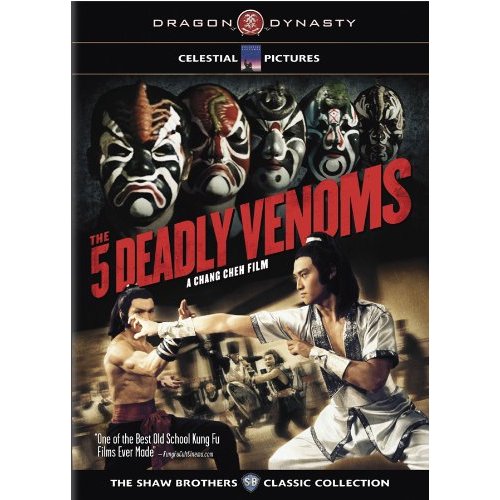
Three years after acquiring the rights to fifty old-school Shaw Brothers releases, Dragon Dynasty finally rolls out the big one, director Chang Cheh’s kung-fu classic, Five Deadly Venoms. Originally released in 1978, it is arguably the best-known Shaw Brothers movie in the world, having influenced everyone from the Wu-Tang Clan to the World of Warcraft, and even making Entertainment Weekly’s Top 50 Cult Films list.
As great as this move is, it’s hard not to see it as a sign of desperation on the part of Dragon Dynasty, who had been sitting on their rights to all these films since their initial wave of Shaw Brothers releases a year ago failed to meet the company’s financial expectations. Which is a terrible shame, in my opinion, because it consisted of six excellently put-together editions of equally choice films (The 36th Chamber of Shaolin, Come Drink With Me, Heroes of the East, My Young Auntie, The One-Armed Swordsman, and my personal favorite, Five Fingers of Death, aka King Boxer), and because it was probably the only thing that the company had managed to do right.
Founded by the Weinstein brothers, and featuring active involvement by Hong Kong cinema expert Bey Logan, as well as fans like RZA and Quentin Tarantino, Dragon Dynasty was initially hailed as the savior of martial arts cinema in the United States, where it has historically been subject to unnecessary cuts and dubs, often in a misguided effort to make the films more accessible to American audiences (and often at the hands of Weinsteins’ own Dimension Films label). And for a while, it seemed like the company was really trying to treat the material with respect, and provide the consumer with the highest quality product, even though they kept the annoying habit of re-titling films in order to make them sound more appealing to the masses (the Shakespearean martial arts drama The Banquet, for example, became The Legend of the Black Scorpion under Dragon Dynasty, despite having fuck-all to do with scorpions, of any color).
However, due to reasons about which I can only speculate (Bad economy? Poor sales?), Harvey and co. soon went back to business as usual, dumping the same incomplete Dimension cuts of classic Jet Li and Jackie Chan films onto their DVDs, sometimes even without an original language audio option, and expecting consumers to not purchase better editions available overseas. Fortunately, this did not seem to affect their first wave of Shaw Brothers releases, all of which came from recently remastered prints from Celestial Pictures, and offered a plethora of special features, which matched or even upstaged the DVDs from the extensive Shaw Brothers catalog offered by the Hong Kong-based distribution company IVL
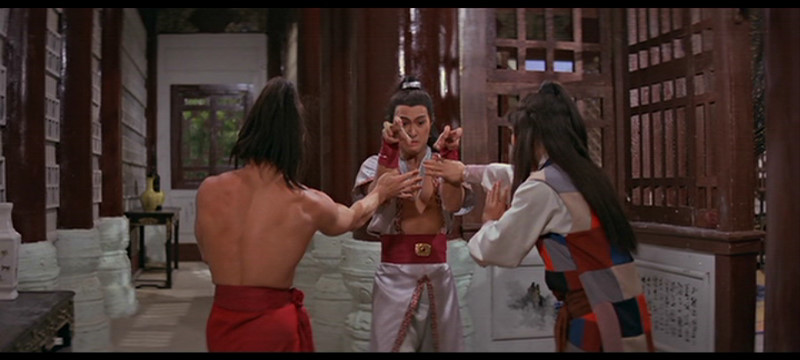
Anyway, the Region 1 faithful can rejoice now, because the wait for this one is finally over, and it was more than worth it: the picture quality is even better than on the IVL release, with more vibrant colors and a generally crisper image, and features none of the distortion and ghosting that plagued that edition, which was interlaced and PAL-sourced. The 5.1 stereo surround remaster of the IVL release is gone, making way for the old-school English dub (which those with fond memories of the film’s initial run in the US will undoubtedly appreciate), in addition to the original Mandarin mono and a Bey Logan audio commentary track, which, as usual, is a real revelation. The man really knows his shit, and his enthusiasm and insider knowledge of martial arts and martial arts cinema always make for an exceptionally entertaining commentary.
For those of you wondering about the plot, it’s simple: the master of the Five Venoms House is dying, and his final wish is for his final student (Chiang Sheng) to seek out five mysterious former pupils, each trained in a different style modeled after a venomous animal whose name he has adopted (the Centipede, the Gecko, the Scorpion, the Snake, and the Toad). He is to team-up with the righteous ones and kill the ones who have been operating against the clan’s best interests. The problem is, since they all wore masks during their training, he has no idea what they look like, and having only been trained in a little of each style, he is no match for any of them by himself. A lot of kicking and punching ensues.
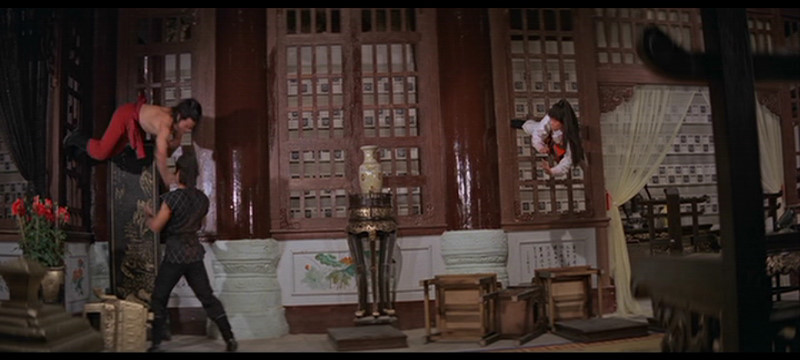
The kung-fu is a bit slow, even by Shaw Brothers standards, but the movie makes up for it in camp value (those Mexican wrestling-style masks are hilarious) and a surprisingly suspenseful plot. This is the movie that established actors Chiang Sheng, Lo Meng, Philip Kwok, Lu Feng, Sun Chien, and Wai Pak as the so-called Venom Mob, who, together with director Chang Cheh, went on to make many more movies featuring better-choreographed fighting, but rarely one this entertaining. If anything, in addition to becoming increasingly more gory, subsequent Venom films only underlined Chang’s obsessions with bare-chested heroics and male bonding, which I personally find rather tiresome. His work is therefore a bit of a mixed bag for me: while his focus on camaraderie and heroic bloodshed, not to mention his latent misogyny (women are often virtually non-existent in his films, and when they are, they are usually either harbingers of doom, or total bitches), can be a detriment to my enjoyment of his movies, the absurdity and glee of some of his more outrageous concepts often manage to make up for it. As a rule, when Chang is playing it straight (as in, say, The Boxer from Shantung), chances are I won’t like it. But the campy, gloriously outlandish stuff (dig Crippled Avengers) totally flips my shit, and I would love to see more of it.
Which is exactly why you guys need to buy this. For $15 you won’t just be getting a fine piece of entertainment, but also encouraging the folks at Dragon Dynasty to keep up the good work they have done with their Shaw Brothers releases, and, most importantly, to keep releasing what they have. American fans of Asian cinema in general, and kung-fu films in particular, have learned the hard way that once Harvey Weinstein gets comfortable sitting on something, it’s pretty fucking hard to get him to move.